Aggiungi titolo
Añadir descripción
Moderne boligbygning med store vinduer, træbeklædning, cykler parkeret i stativer på begge sider, og to personer gående mod kameraet gennem en sti under bygningen.

Why

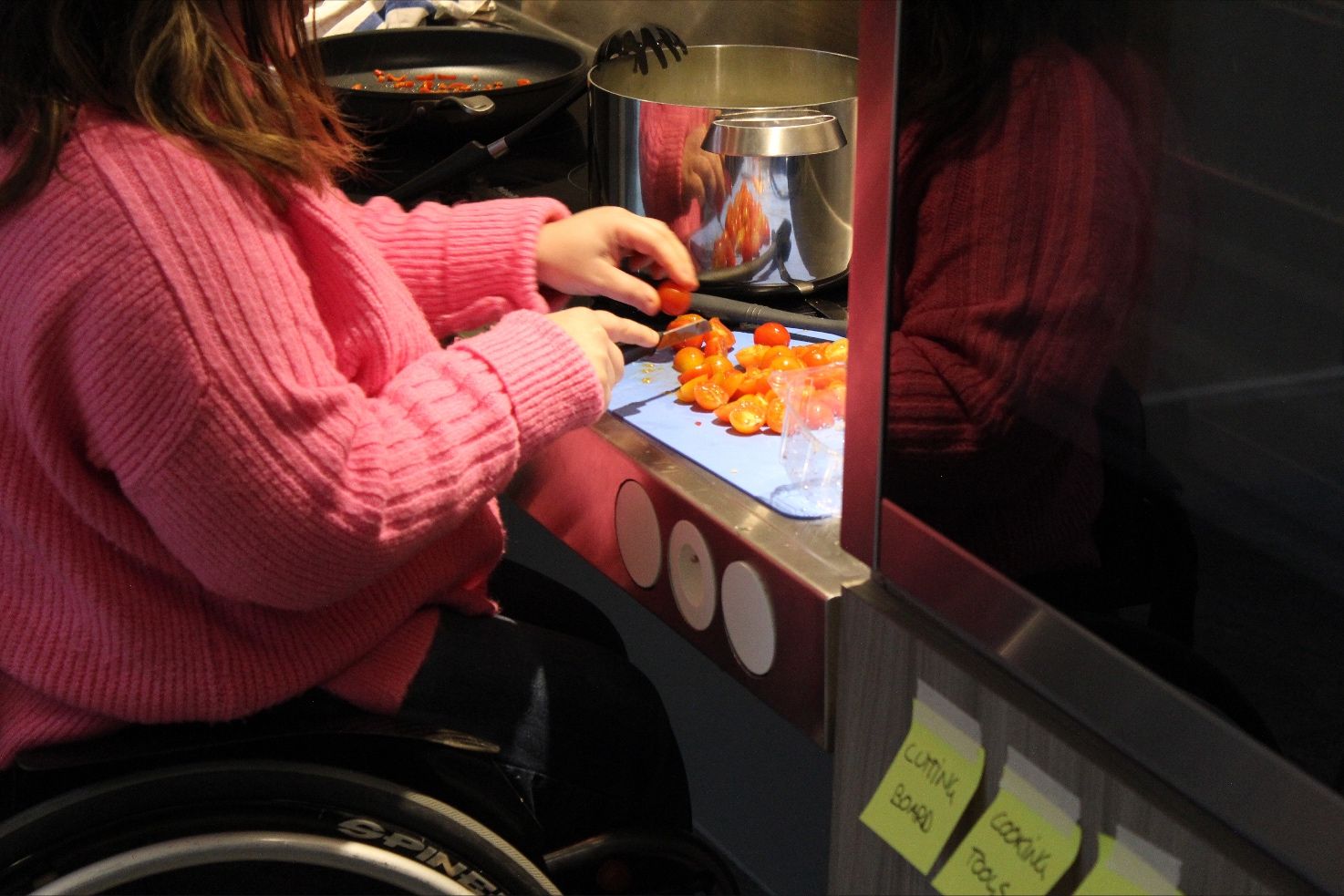
Our homes play an important role in our independence, sense of security and ability to take part in everyday life. When homes create barriers, even everyday activities such as cooking, having visitors or moving between the home and the local community can become difficult.

In this section, you can learn more about why universal design is important in the development of housing. You will gain insights into how our needs change throughout life and why inclusive housing is about more than physical accessibility. It is also about dignity, a sense of belonging and the opportunity to live the life you want, regardless of your physical abilities.

“If we change the way we view other people, we will also create different ways of accessing buildings. We will also create digital services that work for everyone, regardless of how they access them. And we will create open, democratic spaces where people genuinely feel welcome.”

Former European Commissioner for Competition and Executive Vice-President of the European Commission. UIA 2023.

Watch this keynote from the 2023 UIA World Congress of Architects in Copenhagen, where architect, activist and self-proclaimed “Archtivist” Nyasha Harper-Michon calls for us to challenge the Reference Man, a concept familiar to anyone trained in architecture or design. This figure has historically set the standard for how our cities, urban spaces and buildings are designed. But what about everyone who does not fit the Reference Man’s measurements or ways of navigating the world?

The design and accessibility of our homes affect who can visit us and which communities we can take part in. Professor of Architecture Peter Thule Kristensen explains why we need to design for people’s diverse and changing needs. The video shows why universal design in housing is also about community, equality and the opportunity to take part.

Design affects who can take part and who is excluded. This video explores why universal design matters: by taking people’s diverse needs and abilities as our starting point, we can create homes and environments where more people can participate in everyday life and be part of the community.

In this keynote from the 2023 UIA World Congress of Architects, blind architect Chris Downey explores how architects can create cities and buildings that include more people. Drawing on both his professional expertise and lived experience, he explains why ramps and step-free access are not enough. Universal design also requires us to consider different senses, disabilities and ways of experiencing and moving through our surroundings.

Camilla Ryhl provides a brief introduction to universal design: What does the concept mean, and how can it help create environments where more people can participate?

Universal design must be considered from the outset when developing housing and urban areas. In the video, Line Barfod explains why municipalities need to lead the way and set requirements for inclusive architecture. The message is that architectural quality and the opportunity for more people to use buildings and shared spaces must go hand in hand.

Jakob Brandtberg Knudsen challenges architecture’s notion of a single standard human being and explains why we need to design for human diversity, including both visible and invisible differences.

“Society simply wasn’t built for a body like mine, so I’m constantly coming up against barriers.”
Caspar Eric
Poet

Tools

Universal design becomes truly valuable when its principles are translated into concrete decisions. Here you will find methods, guides and inspiration that can be used to explore needs, identify barriers and strengthen the development of housing and residential areas.

The tools can help bring residents’ experiences into the process at an early stage and provide a broader perspective on accessibility and dignified access. They are relevant to architects, developers, consultants and housing organisations, among others, who want to develop solutions that work for more people from the outset.

“Universal design in housing is not just about measurements and regulations, but about understanding how people experience and use their homes in different ways.”

PhD student at the Royal Danish Academy
"“Good shared spaces are created when we recognise that people use them in different ways and have different needs in order to participate.”
Carsten Hvid Nielsen
Postdoctoral researcher at Aalborg University

Examples

What does universal design look like when it becomes part of real homes and residential environments? In this section, you will find projects and organisations that have put inclusive solutions into practice.

The examples present different approaches to areas such as interior design, access, community and resident involvement. They can provide inspiration and serve as a starting point for discussions about how universal design can be integrated into new homes, existing buildings and the shared spaces around our homes.

References for further reading

Other knowledge ressources

At the Bevica Foundation, we do not aim to gather all knowledge in one place. Instead, we regularly refer to other relevant knowledge and research communities and sources that we believe contribute important perspectives, experience and new knowledge on universal design.

Experts in universal design in housing

In our network, you will find a number of experts working with housing and exploring how universal design can create homes and residential areas where more people can live independently, thrive and be part of the community.