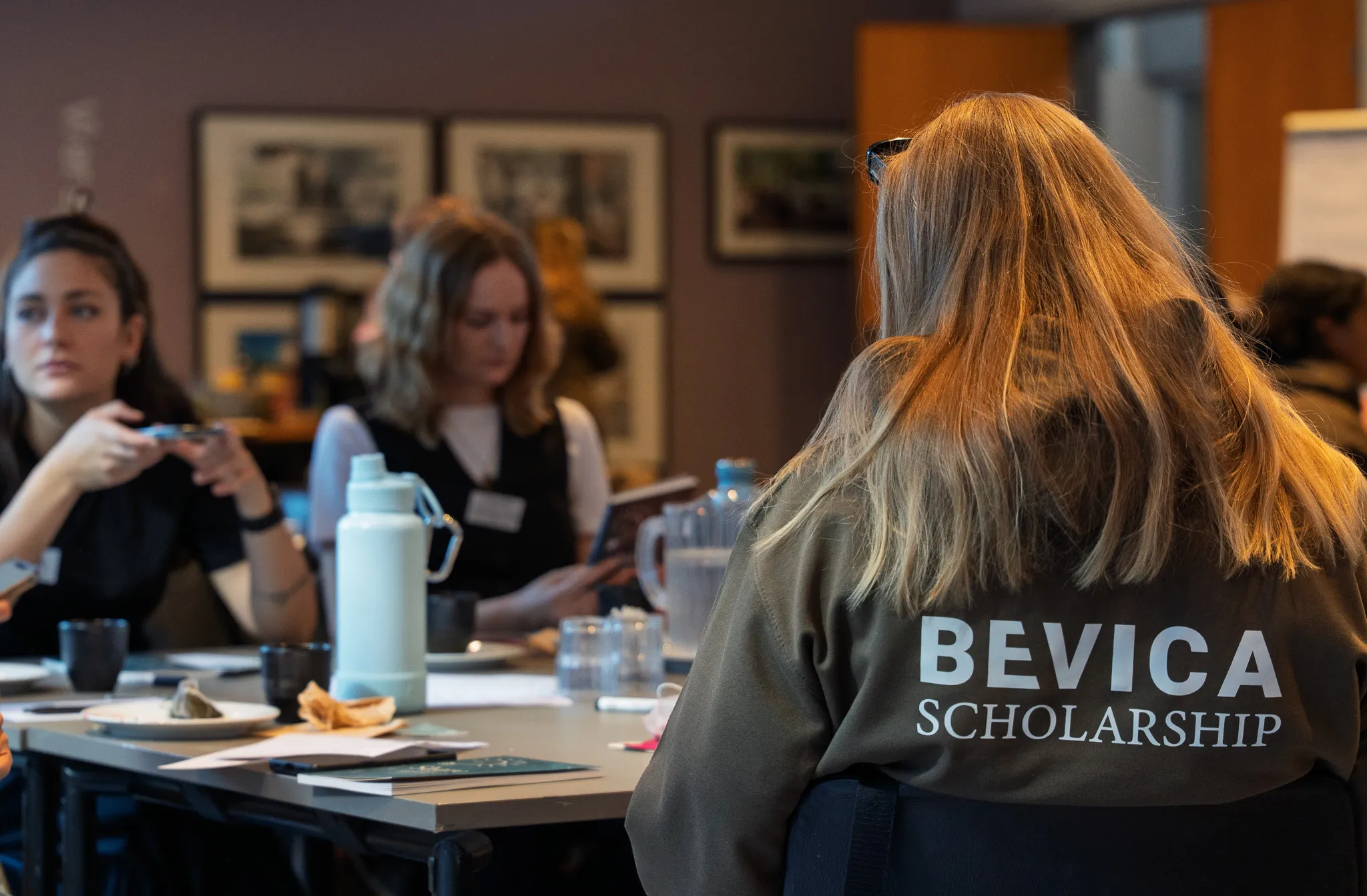
For participants
This information is for participants of the Bevica Scholarship Programme. We have collected everything you need to know about your participation.
We have collected an extensive FAQ, and we will continously update this page with handouts and materials from the workshops. We encourage you to use this page throughout the programme for all your information and documents.
If you are not yet part of the programme, you can register through the button down below. Registration for Bevica Scholarship Programme 2027-2028 opens in september 2026.
The call
We call for students and lectureres to answer the question: How do we create an inclusive society for all?
You can use the call as a reference throughout the programme. It explains the overall purpose of the Bevica Scholarship Programme, the challenge you are invited to work with, and what is expected of you as a participant.
Upcoming workshops
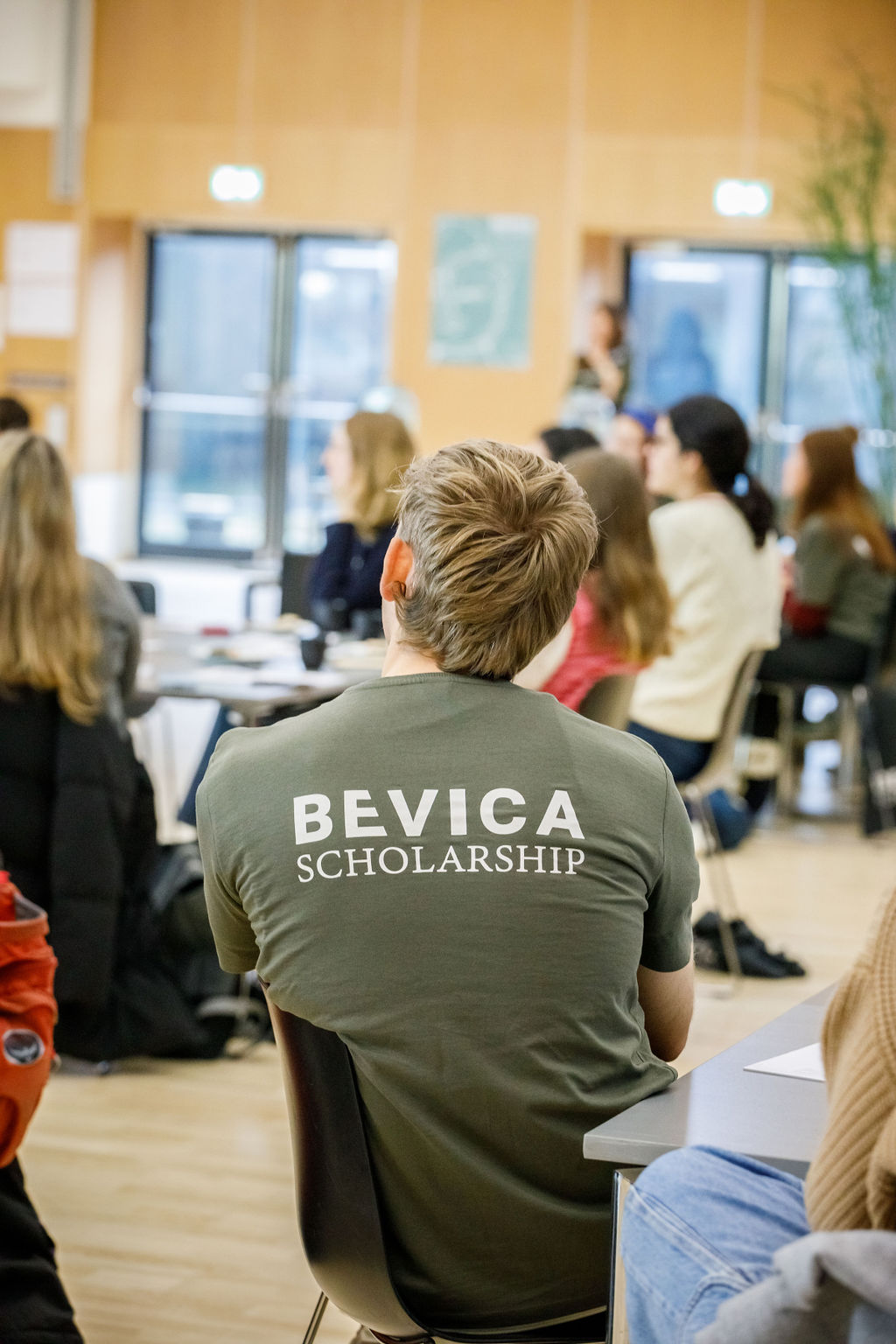
The Scholarship workshops will all be held at Musholm Conference Center in Korsør.
6 February 2027: Ideation Workshop 1
6 March 2027: Ideation Workshop 2
These full-day Ideation workshops are designed to spark inspiration and idea development through collaboration. They feature presentations by experts across various disciplines and hands-on workshops to introduce key knowledge and resources. The purpose is for the group to meet each other and get an introduction to the goals and core concepts of the Scholarship Programme.
4-5 June: A two-day Creation Workshop (for shortlist members)
The Creation Workshop will feature individual feedback on project proposals for all participants. Participants will also be pointed towards relevant contact persons and knowledge environments to support their investigations.
The programme also offers a pitch workshop, where participants will learn about the theory behind a good pitch and practice pitching in smaller groups. The workshop also features a celebratory dinner, as well as time for networking.
We will email participants the detailed information about the workshops.
After the workshops, you will find materials and handouts from the workshops on this page under "Workshop materials".
What are you looking for?
Knowledge modules
We have collected all the knowledge modules for the partcipartion in the Bevica Scholarship Programme 2027-2028 in the following.
Please find the full Bevica Scholarship Programme curriculum via the button below. Further down you find other relevant knowledge modules.
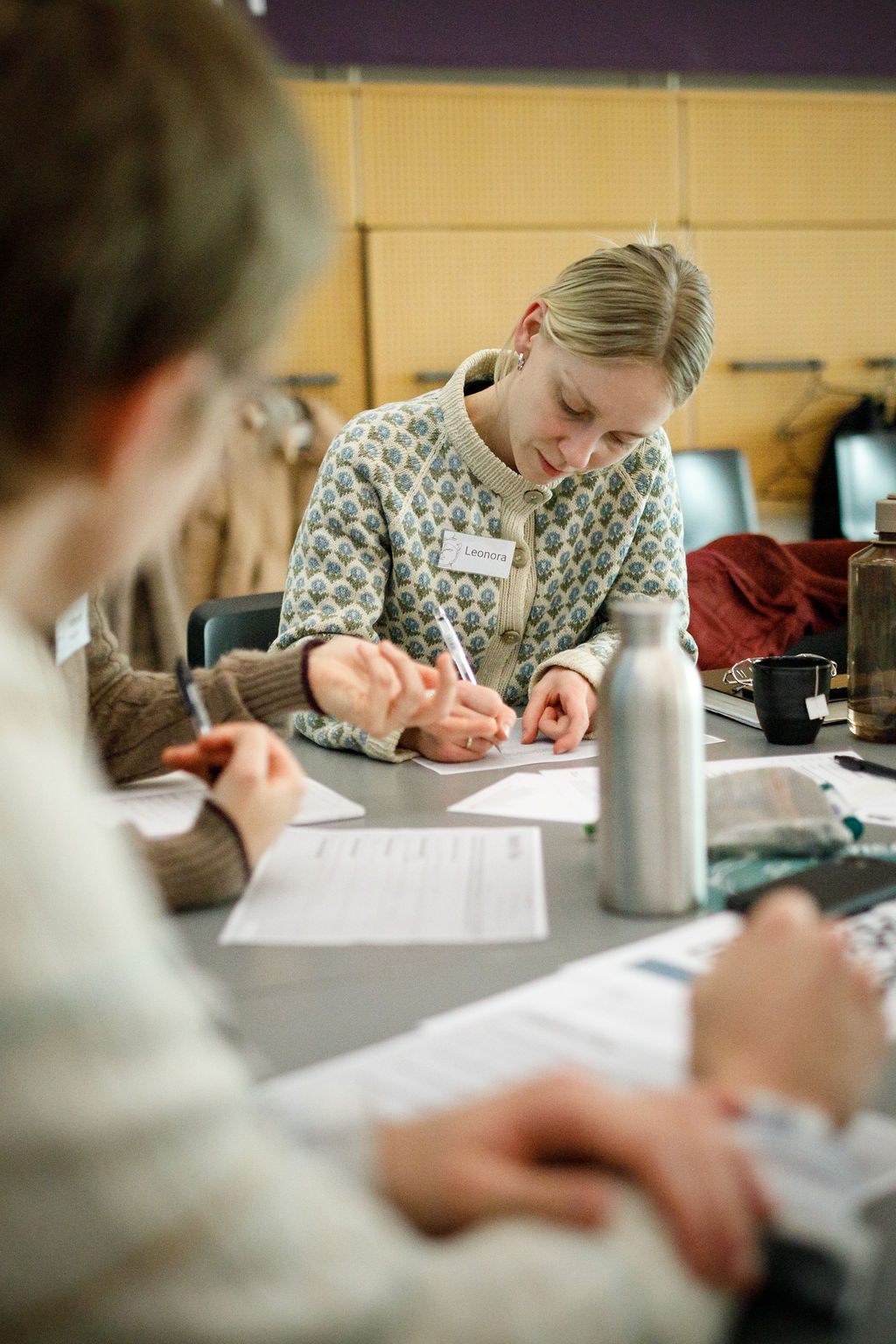
This Introduction Package serves as a basic introduction to the core objectives of this year’s Bevica Scholarship call: Universal Design, Being Human and Leave No One Behind.
The Package consists of 5 key references: two texts and three videos.
Before we meet at the Ideation Workshop on 1 February, you are expected to have studied the references of the Introduction Package.
Your preparation will ensure a common knowledge base for all participants and as a basic framework for understanding, discussion and preliminary ideation of your individual project proposals.
We strive to be accessible.
If you experience difficulties using the website or accessing the materials, please don’t hesitate to contact us at scholarship@bevica.dk.
Universal design – introduction to a design principle that challenges the idea of being human
Reference: Ryhl, Camilla, Eiriksson, Marie, Overby Sørensen, René (2021) Universal design –introduction to a design principle that challenges the idea of being human. Universal Design Hub – Bevica Fonden.
Format: Text
Keywords: Concept, Principles, Goals, History, Ron Mace
Workload: 6 pages
Description: This article introduces the concept of Universal Design – its origins, scientific context, and application. It introduces the 7 key principles and 8 goals of Universal Design and exemplifies how they might be addressed in different areas of society.
Webinar – Universal design: From vision to practice in everyday life in the Nordic countries
Reference: VIVE (2023) Webinar (3) – Universal design: From vision to practice in everyday life in the Nordic countries. Presentation by Camilla Ryhl: Universal Design and Human Diversity – a Danish Perspective (25:35 – 43:30).
Format: Video (Selected time span: 25:35 – 43:30)
Keywords: Universal Design, History, Danish Context, Leave No One Behind
Workload: 18 minutes
Description: In this video, Research Director at the Bevica Foundation, Camilla Ryhl, provides a keynote speech, sharing experiences and reflections about the historical development and visions for the future development of universal design in Denmark. During her presentation, Camilla highlights the ambitions and initiatives in the Universal Design Hub – Bevica Foundation to proliferate the value-based term universal design to help fulfil the pledge Leave No One Behind from the 2030 Agenda for Sustainable Development.
Link: https://www.vive.dk/da/arrangementer/2023/webinar-3-universal-design-from-vision-to-practice-in-everyday-life-in-the-nordic-countries/ (or directly in the video below).
Nothing About Us Without Us
Reference: Charlton, James (2000) Nothing About Us Without Us. In: Nothing About Us Without Us: Disability Oppression and Empowerment. Berkeley, CA: University of California Press. Chapter 1, pp. 3-18.
Format: Text
Keywords: Disability Rights Movement, Disability Oppression, Lived Experience, Organization of Empowerment, History
Workload: 15 pages
Description: This book chapter is the introduction to the landmark book on disability Nothing About Us Without Us written by disability rights activist James Charlton. The chapter touches briefly on topics concerning the disability rights movement, disability oppression, lived experiences, and disability as a social construction. Overall, the book provides a theoretical overview of disability oppression that shows the similarities to, and differences from, racism, sexism, and colonialism.
Link: Access may be retrieved from your educational library.
Models of disability: A short introduction
Reference: Falster, Emil (2023) Models of disability: A short introduction. Lunch Bag Lecture. Universal Design Hub – Bevica Fonden.
Format: Video
Keywords: Theory, Models of Disability, Impairment Effects, Barriers and Solutions
Workload: 7 minutes
Description: In this video, Post.doc. at the Bevica Foundation, Emil Falster, discusses three different models of disability: the medical model, the social model, and the relational model. He argues how our understanding of terms such as disability and impairment effects how we understand the barriers and challenges that people with impairments face every day – and how these understandings ultimately generate the solutions we conceive to create equal opportunities for participation.
Ableism: A short introduction
Reference: Falster, Emil (2024) Ableism: A short introduction. Lunch Bag Lecture. Universal Design Hub – Bevica Fonden.
Format: Video
Keywords: Ableism, “The Normal Body”, Discrimination – Structural, Institutional, and Social
Workload: 8 minutes
Description: Presenting his book titled “Ableism – Power, Human Perspective, and the Myth of the Normal Body.”, Emil Falster briefly explains what the concept of Ableism is all about. Emil presents how Ableism can be briefly defined as the discrimination that arises from the preference for the so to speak, “able-bodied”, “neurotypical”, “healthy” or “normal” people. Ableism is the discrimination that occurs when we systematically favour “the normal”. And as emphasised by Emil, this discrimination concretely manifests in a range of structural, institutional, and social frameworks and conditions which are created and designed for the “normal body” in our society.
Supplementary readings
Thematic Collection: Universal Design - What you need to know
www.bevicafonden.dk/en/viden/temapakker/universelt-design-det-du-skal-vide
Frandsen, Anne Kathrine; Bonfils, Inge Storgaard; Olsen, Leif (2024) Universal design allows everyone to take part. Introduction Chapter in Universal design: Cross-disciplinary perspectives in theory and practice. Aalborg Universitetsforlag, pp. 11-32.
DTU – Skylab (2024) Universal Design Guide. https://universaldesignguide.com/
This self-study module provides a mix of book chapters, digital talks and lectures, scientific papers, and a website on the general theme of Universal Design.
The module consists of 6 mandatory references for you to study at your own pace during Ideation.
You are encouraged to expand your investigations beyond the module, and to seek advice and inspiration from the peers and experts you meet during Ideation.
Universal design
Reference: Ryhl, Camilla (2022) Universal design. Universal Design Hub – Bevica Fonden.
Format: Video
Keywords: Universal Design, History, Inclusion, Inclusive design, Design for all
Workload: 3 minutes
Description: This video briefly summarizes the fundamentals of Universal Design. It examines the applicability of Universal Design and how it encompasses all aspects of our life. Ultimately, Universal Design is a value-based design principle that ensures equal and inclusive solutions for all – regardless of abilities.
Universal design: an evolving paradigm
Reference: Ostroff, Elaine (2010) Universal design: an evolving paradigm. In: Universal Design Handbook. Preiser, Wolfgang & Ostroff, Elaine (eds.) New York: McGraw-Hill. Chapter 1, pp. 34-42.
Format: Text
Keywords: Introduction to Universal Design, Convention on the Rights of Persons with Disabilities (CRPD), Historical and Cultural perspective
Work load: 10 pages
Description: Elaine Ostroff introduces Universal Design as an evolving paradigm and offers a historical and cultural perspective by placing Universal Design in different contexts such as Universal Design and Education, Universal Design and Business, Universal Design and Society.
Access: Can be retrieved from your educational library
Per-Olof Hedvall on Universal Design
Reference: Hedvall, Per-Olof (2024) Universal design. Universal Design Hub – Bevica Fonden.
Format: Video
Keywords: Universal Design, Accessibility, Usability, UN Convention on the Rights of People with Disability (CRPD), Swedish Context
Workload: 5 minutes
Description: In this video, Professor of Design at Mid Sweden University, Per-Olof Hedvall, briefly argues how we need to work with accessibility, usability and universal design to raise awareness of what is important for whom, who can go where, do what, and contribute to which areas in society. Moreover, Per-Olof stresses how we need to seek out the variation of users, the outer edges of use, and situations of users. This needs to be done while actively asking questions – not only about who is present; who is here but struggles; but also who is absent, and why the so called non-users often are forgotten or left out.
What is Universal Design?
Reference: Steinfeld, Ed & Maisel, Jordana (2012) What is Universal Design. University at Buffalo – Center for Inclusive Design and Environmental Access (IDEA).
Format: Text
Keywords: Universal Design, History, 7 Principles, 8 Goals, Overview of Universal Design
Workload: 8 pages
Description: On this webpage, Center for Inclusive Design and Environmental Access (IDEA) at University of Buffalo shortly describes the concept of Universal Design and its historical context and 7 principles, which were added in 1997 to clarify the scope of Universal Design. In addition, the webpage briefly exemplifies the 8 Goals of Universal Design developed by Ed Steinfeld and Jordana Maisel in 2012 to expand the conceptual framework of Universal Design beyond usability to include social participation and health, acknowledging the role of context in developing realistic applications.
Link: https://idea.ap.buffalo.edu/about/universal-design/
Accessibility, usability and universal design – still confusing? Harmonisation of key concepts describing person-environment interaction to create conditions for participation.
Reference: Hedvall, P. O., Ståhl, A., & Iwarsson, S. (2025). Accessibility, usability and universal design – still confusing? Harmonisation of key concepts describing person-environment interaction to create conditions for participation. Disability and Rehabilitation, 1–10.
Format: Text
Keywords: Accessibility, Usability, Method,Universal Design
Workload: 10 pages
Description: This paper describes recent developments, how the concepts accessibility, usability, and universal design relate to and complement each other, and the synergies they create. Reflecting on the lack of clarity in their application, the writers argue that definitions are crucial and that the concepts can be combined and harmonised in a synergistic entity: The participation of all is the ultimate goal of society.
Link: https://doi.org/10.1080/09638288.2025.2491831
Universal Design and disability: an interdisciplinary perspective
Reference: Lid, Inger Marie (2014) Universal Design and disability: an interdisciplinary perspective. Disability and Rehabilitation, 36:16, 1344-1349.
Format: Text
Keywords: Interdisciplinary Field of Knowledge, Convention on the Rights of Persons with Disabilities (CRPD), Human Plurality
Work load: 6 pages
Description: This is a theoretical paper. It discusses the understanding of Universal Design as an interdisciplinary theme and the significance of Universal Design in research and teaching. The paper builds on literature and focuses on how to recognise Universal Design in interdisciplinary contexts.
Link: https://doi.org/10.3109/09638288.2014.931472
Universal Design in architecture – On enabling and empowering a diverse population
Reference: Ryhl, Camilla (2024) Universal Design in Architecture – On enabling and empowering a diverse population, Copenhagen: The Danish Architectural Press. Chapter 1, pp. 14-29.
Format: Text
Keywords: Universal Design, History, Nordic context
Work load: 10 pages
Description: This book chapter outlines the history of Universal Design and the evolution of Universal Design with in the Nordic context.
Supplementary readings - Universal Design
Thematic Collection: Universal Design - What you need to know
www.bevicafonden.dk/en/viden/temapakker/universelt-design-det-du-skal-vide
Hamraie, Aimi (2013) Designing Collective Access: A Feminist Disability Theory of Universal Design. Disability Studies Quarterly (DSQ). Vol. 33 No. 4 (2013): Special Issue: Improving Feminist Philosophy and Theory by Taking Account of Disability.
Story, Molly (2010) Principles of Universal Design. Universal Design Handbook, Edited by: Preiser, Wolfgang & Smith, Korydon. New York: McGraw-Hill. Chapter 4, pp. 58-67.
Hedvall, Per-Olof; Price, Margaret; Keller, Johnna; Ericsson, Stina (2022) Towards 3rd generation universal design: Exploring nonclusive design. Studies in Health Technology and Informatics.
Center for Independent Living – Berkeley (2024) The 7 Principles of Universal Design. https://www.youtube.com/watch?v=G-tHuD7R8cs (or in the video below):
Story, M.; Mueller, J.; Mace, R. (1998) The Universal Design File: Designing for People of All Ages and Abilities. North Carolina State Univ., Raleigh. Center for Universal Design.
Gissens, David (2023) The Architecture of Disability: Buildings, Cities, and Landscapes beyond Access. University Of Minnesota Press.
Aslaksen, Finn; Bergh, Steinar; Bringa, Olav Rand; Heggem, Edel Kristin (1997) Universal Design – Planning and Design for All. The Norwegian State Council on Disability.
Erdtman, E.; Rassmus-Gröhn, K.; Hedvall, P.-O. (2021) Universal Design as Guiding, Striving and Unifying: A Qualitative Study about how Universal Design is Understood, Practised and Realised in Contemporary Sweden. Scandinavian Journal of Disability Research, 23(1), 158–168.
Institut for Blinde og Svagsynede (2022) Blind Lyd – Podcast: 1. Nordisk kongres i Synspædagogik: Universelt design. https://www.podbean.com/media/share/pb-65mkw-12dad45
Sarah Houbolt (2017) TEDxSidney: Designing for Function and Universal Access. https://www.youtube.com/watch?v=DRWgQrd7y2c (or in the video below):
Robier, Hannes (2024) Human-Centered ISO Standards. https://www.linkedin.com/pulse/human-centered-iso-norms-hannes-robier-qdhzc/?trackingId=z9GGJjQnSFivYyLFM9rybw%3D%3
Ryhl, Camilla (2024) Universal Design in Architecture – On enabling and empowering a diverse population, Copenhagen: The Danish Architectural Press.
Knowledge Module: Being Human
This self-study module provides a mix of book chapters, digital talks and lectures, scientific papers, and a movie on the general theme of Being Human.
The module consists of 5 mandatory references for you to study at your own pace during Ideation.
You are encouraged to expand your investigations beyond the module, and to seek advice and inspiration from the peers and experts you meet during Ideation.
Understanding Disability
Reference: Shakespeare, Thomas (2018) Understanding Disability. In: Disability: the basics. Routledge. Chapter 1.
Format: Text
Keywords: Understanding Disability, Disability Across Time and Place, Lived Experiences
Workload: 24 pages
Description: Disability: the basics is an introduction to disability as a multi-dimensional concept and explores the historical, social, environmental, economic, and legal factors which affect experiences of people living with impairments in modern-day society. It offers an understanding of the lived experiences of disabled people and underline continuing gaps and barriers in social responses to the challenge of disability.
Link: https://www.routledge.com/Disability-The-Basics/Shakespeare/p/book/9781138651395
The Myth of Average: Todd Rose at TEDxSonomaCounty
Reference: Rose, Todd (2013) The Myth of Average: Todd Rose at TEDxSonomaCounty.
Format: Video
Keywords: One-dimensional metrics, Jagged size profile, Learning environments, Technology, Talent
Workload: 18 minutes
Description: In this TED Talk, Todd Rose argues that if you design for the average sized person you design for nobody. According to Rose we all have “a jagged size profile” meaning that our body dimensions such as height, weight and waist are not the same on every dimension. Ultimately, Rose argues how we ought to ban the average and generate designs that accommodate for the edges of dimensions.
Disability as a human condition discussed in a theological perspective
Reference: Lid, Inger Marie (2012) Disability as a human condition discussed in a theological perspective. Diaconia. Journal for the Study of Christian Social Practice. Vol. 3.
Format: Text
Keywords: Understanding Disability, Disability Across Time and Place, Lived Experiences, Law, Politics
Workload: 14 pages
Description: This article discusses the understanding of disability in a notion of human diversity that includes disability as a human condition. From a disability studies perspective, a medical understanding of disability has been criticised for the absence of disabling structures in society. Lid argues that inclusive concepts of humanity must guide law and politics.
Link: http://dx.doi.org/10.13109/diac.2012.3.2.158
Doing Dis/ability and Architecture Differently?
Reference: Boys, Jos (2016) Doing Dis/ability and Architecture Differently? AA School of Architecture.
Format: Video
Keywords: Perspectives on disability, Architecture, Gender, Understanding of normal
Workload: 1 hour 28 minutes
Description: In this video, Jos Boys discusses what can happen to architecture and its practices when ‘normal’ (and normative) assumptions about disability and ability are creatively and critically challenged. The video investigates our perceptions of normalcy, disability, and ability in the context of architecture.
Crip Camp
Reference: Crip Camp (2020) Higher Ground Productions.
Format: Video
Keywords: Discrimination, Disability Rights Movement, Activism, Empowerment, History
Workload: 1 hour 46 minutes
Description: In the early 1970s, teenagers with disabilities faced a future shaped by isolation, discrimination, and institutionalization. This movie tells the story about one group of disabled young people and their journey to activism and adulthood, and in doing so, provides an opportunity for all to delve into the rich and complicated history of disability activism, culture, and history.
Supplementary readings - Being Human
Overby, René S.; Falster, Emil (2024) The Human Body in Architectural Theory and Practice. ARCH24 Proceedings. https://ebooks.iospress.nl/doi/10.3233/SHTI240935
Lid, Inger Marie; Steinfeld, Edward; Rembis, Michael (2023) Rethinking Disability and Human Rights: Participation, Equality and Citizenship
Wong, Alice (2024) Disability Intimacy: Essays on Love, Care, and Desire. Penguin Random House.
Shakespear, Tom (2022) Models of disability (with a side order of The Life of Brian). https://www.youtube.com/watch?v=oAHnKutOkYI (or directly in the video below):
Lingsom, Susan (2012) Public space and impairment: an introspective case study of disabling and enabling experiences. Scandinavian Journal of Disability Research. Volume 14, 2012 – Issue 4.
Wolbring, Gregor (2008) The politics of ableism. Development, Vol. 51, Issue 2, pp. 252-258.
Treviranus, Jutta (2025). The ethical dilemmas of artificial intelligence. In L. Feingold,R. Gilbert, & C. Fleet (Eds.), Digital accessibility ethics: Disability inclusion in all things tech. Routledge. pp. 48-61.
Lid, I. M.(2026). Recognising disability in higher education: A human rights perspective. Routledge. https://doi.org/10.4324/9781003671077
Knowledge Module: Leave No One Behind
This self-study module provides a mix of digital lectures and one webpage on the general theme of Leave No One Behind.
The module consists of 5 mandatory references for you to study at your own pace during Ideation.
You are encouraged to expand your investigations beyond the module, and to seek advice and inspiration from the peers and experts you meet during Ideation.
Universal Design and Leave No One Behind
Reference: Ryhl, Camilla (2022) Universal design and Leave No One Behind. Universal Design Hub – Bevica Fonden.
Format: Video (speech in Danish, captions in English)
Keywords: Concept, History, View of humanity, Sustainable Development Goals, Disability
Workload: 14 minutes
Description: This video is an introduction to the concept of Universal Design. It explores the history of the concept, provides examples of its application, and clarifies how Universal Design can work as a lever for the UN Sustainable Development Goals.
Leave No One Behind
Reference: United Nations (2022) Leave No One Behind.
Format: Webpage
Keywords: Pledge, Commitment, Responsibility, Reach the furthest behind first
Workload: 1 page
Description: This webpage documents how the 193 United Nation Member States of the 2030 Agenda have committed to Leave No One Behind in their implementation of the SDGs. Moreover, it stresses how Member States will “endeavour to reach the furthest behind first” from an essential recognition of how “the dignity of the human person is fundamental”.
Link: https://www.un.org/en/desa/leaving-no-one-behind
Universal Design, Equality and Accessibility
Reference: Lawson, Anna (2024) Universal Design, Equality and Accessibility. Keynote Speech – UD2024 Conference.
Format: Video (Selected time span: 00:10:06 – 00:40:40)
Keywords: Universal Design, Huma nRights, CRPD, Equality, Accessibility
Workload: 34 minutes
Description: In this keynote speech, Professor of Law, Anna Lawson showcases how Universal Design is situated in the international human rights framework, and an obligation in the UN Convention on the Rights of Persons with Disability. Ultimately, Lawson argues how Universal Design is embedded in and a pre-condition for the fulfilment of human rights.
Universal Design and the 2030 Agenda for Sustainable Development
Reference: Ono, Masumi (2024) Universal Design and the 2030 Agenda for Sustainable Development. Keynote Speech – UD2024 Conference.
Format: Video (Selected time span: 01:18:15 – 01:45:20)
Keywords: Universal Design, Sustainable Development Goals, 2023 Agenda, Social Inclusion
Workload: 27 minutes
Description: In this keynote speech, Chief of Social Inclusion and Participation Branch in the UN Department for Economic and Social Affairs, Masumi Ono argues how Universal Design is important for the 2030 Agenda and vice versa. According to Masumi Ono, universal design principles, if embedded in policy making, can offer an effective approach towards reducing inequalities, promoting social inclusion and insuring accessibility at local, national and global levels.
SDGs and Universal Design
Reference: Wandel, Jens (2022) SDGs and Universal Design. Universal Design Hub – Bevica Fonden.
Format: Video
Keywords: UN, Sustainable development, Sustainable Development Goals, Human agency, Disability
Workload: 3 minutes
Description: In this video, the 17 Sustainable Development Goals are broken down into 4 aspects of our lives. The video discusses sustainability, Universal Design and the Leave No One Behind agenda, and how they are all connected.
Supplementary reading - Leave No One Behind
UNDP (2018) What does it mean to leave no one behind? A UNPD discussion paper and framework for implementation. https://www.undp.org/library/what-does-it-mean-leave-no-one-behind
United Nations (2022) The 17 Goals. https://sdgs.un.org/goals
United Nations (2024) SDGs and Me. https://ec.europa.eu/eurostat/cache/visualisations/sdgs/
The World Bank (2022) Disability Inclusion. https://www.worldbank.org/en/topic/disability#1
WHO (2023) Disability. https://www.who.int/news-room/fact-sheets/detail/disability-and-health
Abualghaib, Ola; Groce, Nora; Simeu, Natalie; Carew, Mark T.; Mont, Daniel (2019) Making Visible the Invisible: Why Disability-Disaggregated Data is Vital to “Leave No-One Behind”. Sustainability 2019, 11(11), 3091.
Ericsson, Stina; Wojahn, Daniel; Sandström, Ida; Hedvall, Per-Olof (2020) Language that Supports Sustainable Development: How to Write about People in Universal Design Policy. Sustainability 2020, 12(22), 9561.
UN Sustainable Development Group (2022) Operationalizing Leaving No One Behind. https://unsdg.un.org/resources/leaving-no-one-behind-unsdg-operational-guide-un-country-teams
Universal design represents a basic view of humanity which recognises that diversity in functional ability and needs is a basic condition. It also means that when we have to accommodate great diversity – and sometimes opposing needs – in solutions, we can interpret universal design in two ways: Either the individual solution, which accommodates everyone whenever possible, and if this is not possible without resulting in the lowest common denominator, the universal solution can be a catalogue of solutions. For example, this could entail designing three ways to get into a building or across a road, and it is the catalogue of those three solutions that together make up the universal design solution. Because diversity in user needs requires diversity in solutions.
The selected cases demonstrate diverse approaches to applying this basic view of humanity in education, employment, and leisure.
These examples highlight how universal design has been effectively implemented across four key areas: product, environment, programmes and services.
Product
Drinksaver
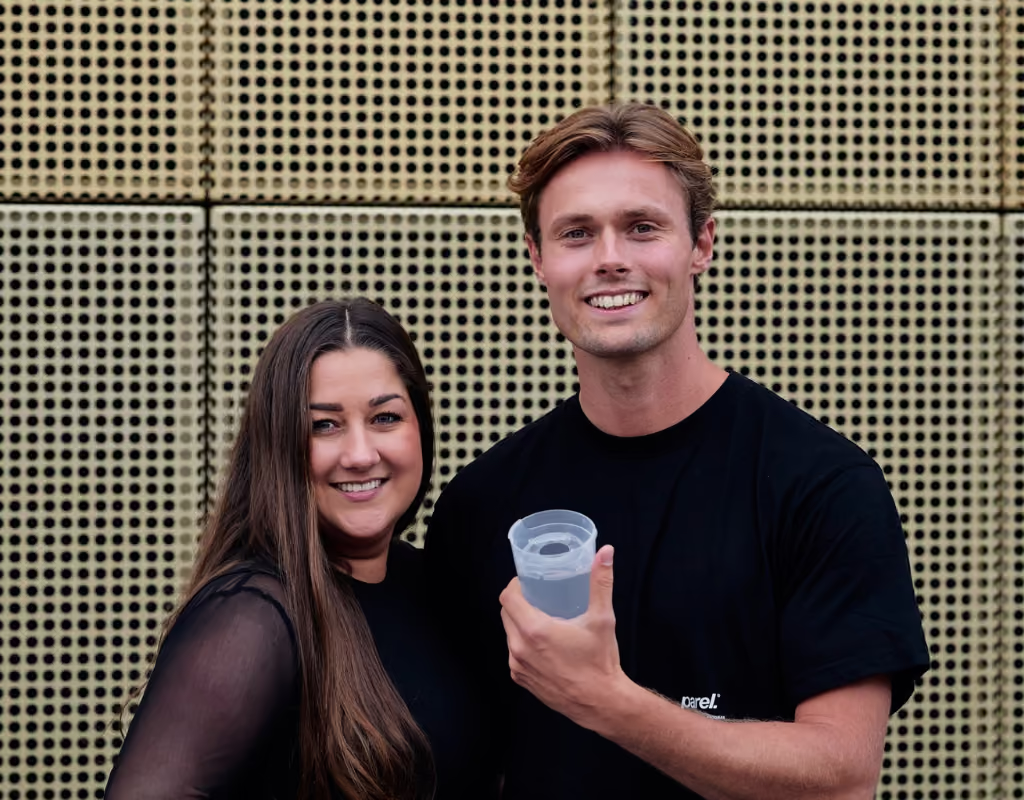
Drinksaver is a Danish company that has developed a innovative drinking glass with a lid, allowing you to enjoy your drinks in the regular way without fear of spillage. Drinksaver is committed to creating well-designed drinking glasses that promote independence and dignity by combining aesthetics and practicality, aiming to create a spill-proof and user-friendly product.
Read more about Drinksaver here.
L’Oréal HAPTA
An estimated 50 million people globally live with limited fine motor skills. This makes some daily gestures, like applying makeup, challenging. Under development by L’Oréal scientists and engineers, HAPTA is a handheld, ultra-precise smart makeup applicator for users with limited hand and arm mobility, offering them the ability to steadily apply lipstick at home.
Read more about L'Oréal Hepta here.

OXO
OXO was founded by Sam Farber, who created the iconic potato peeler for his wife because she suffered from arthritis in her hands, making it difficult to hold a regular peeler. Today, OXO offers more than 2000 products for the kitchen and home. All products are based on the principle of universal design, meaning they can be used by as many different people as possible.
Read more about OXO here.

LEGO
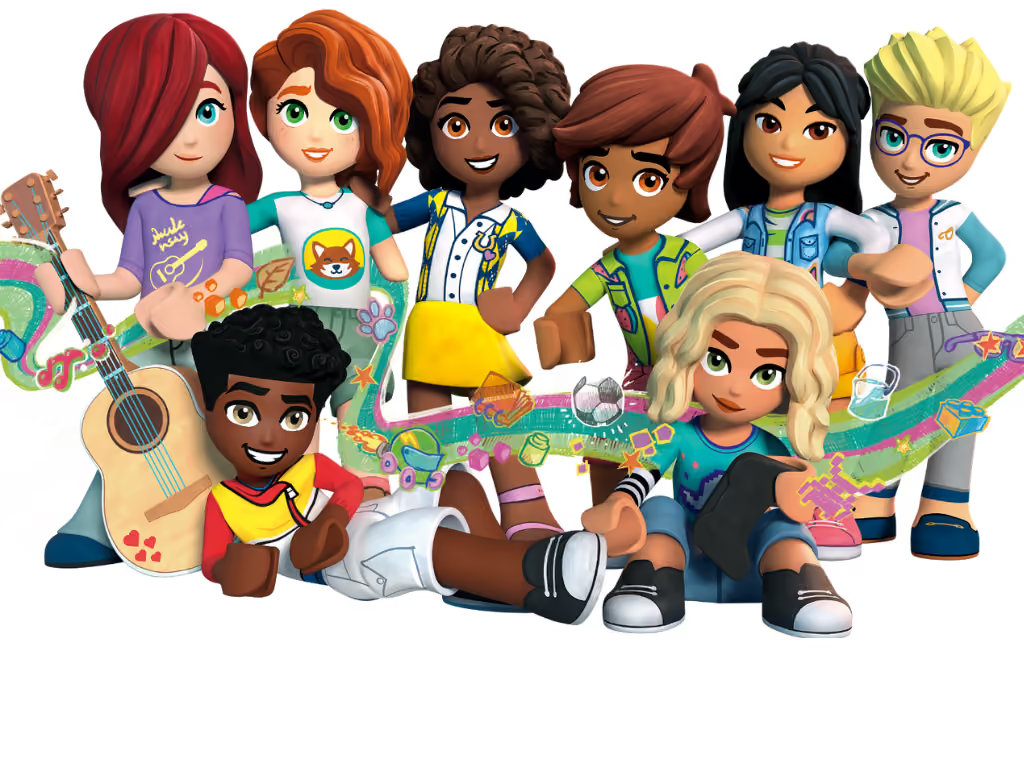
A decade on from the launch of LEGO® Friends, the LEGO Group has re-imagined the Friends Universe, with the introduction of new diverse characters, to enable more children to feel represented during play. The new universe of authentic, interesting, and diverse characters includes additions of multiple skin tones, cultures, physical and non-visible disabilities, and neurodiversity.
Read more about the Lego Friends universe here.
Anker Bak
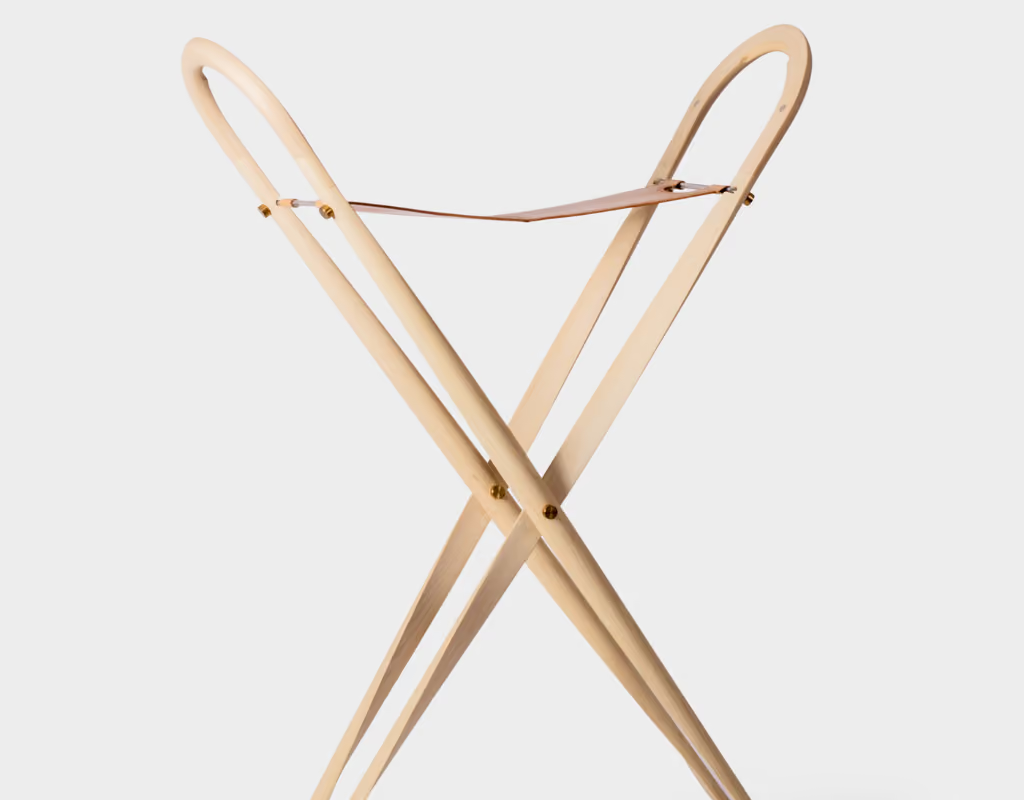
Designer Anker Bak designs all the items we hope we will never need. Anker Bak has received two of Denmark’s most prestigious design awards within a few days for his walkers, crutches, canes, and coffins. He aims to create designs of necessity and make life more dignified for people with disabilities.
Read more about the work of Anker Bak here.
Environment
Musholm
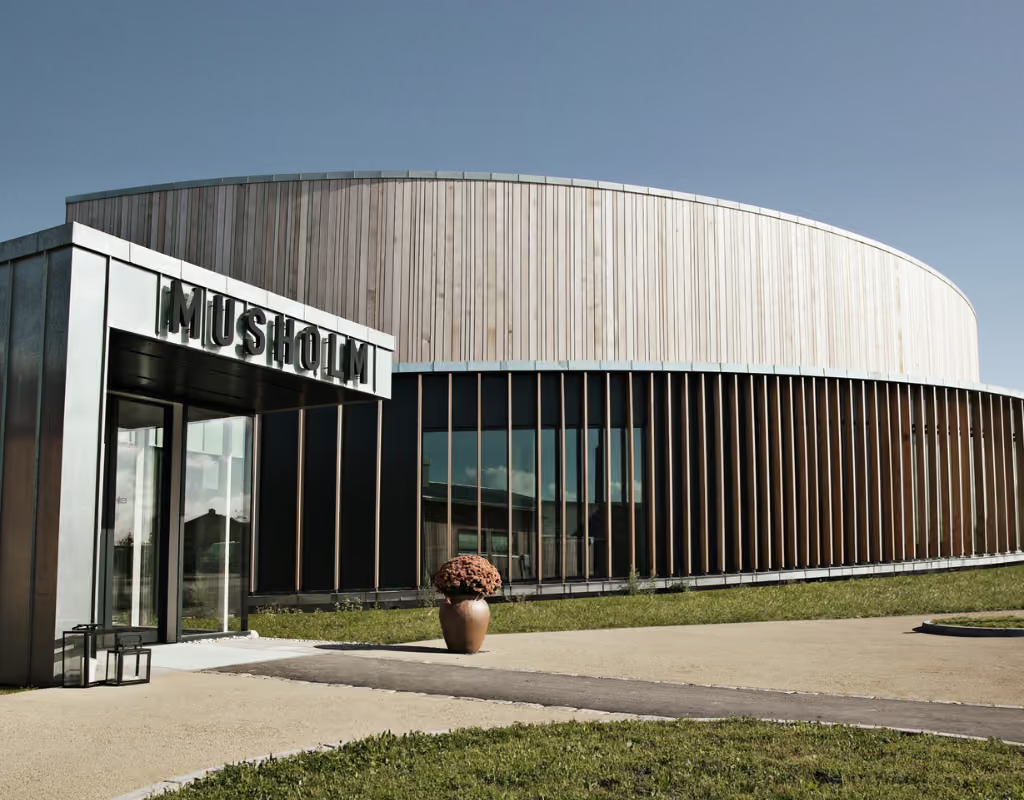
Musholm was awarded the world’s most accessible holiday, sports and conference center in 2016. Their goal is to include everybody regardless of age and physical ability. Musholm is groundbreaking and unique in many ways. It integrates accessibility requirements naturally and beautifully into its architecture, creating spaces for all and offering new physical opportunities for people with impaired mobility.
Read more about Musholm here.
Roskilde Festival
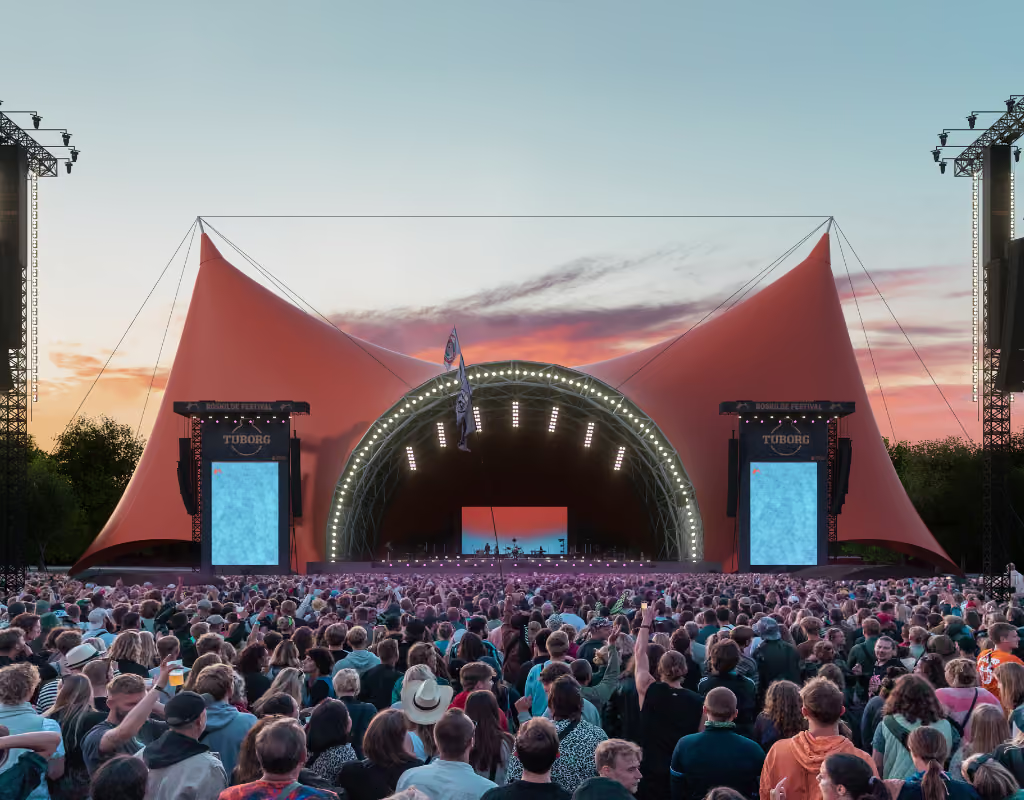
Roskilde Festival is constantly working to reduce barriers to participation and increase the experience of both physical and mental accessibility at the festival site. This guide provides advice on accessibility when arriving and staying at this year’s festival. The guide may be particularly relevant for those who have special needs, for example reduced vision or mobility.
Read more about the festival's work on accessibility here.
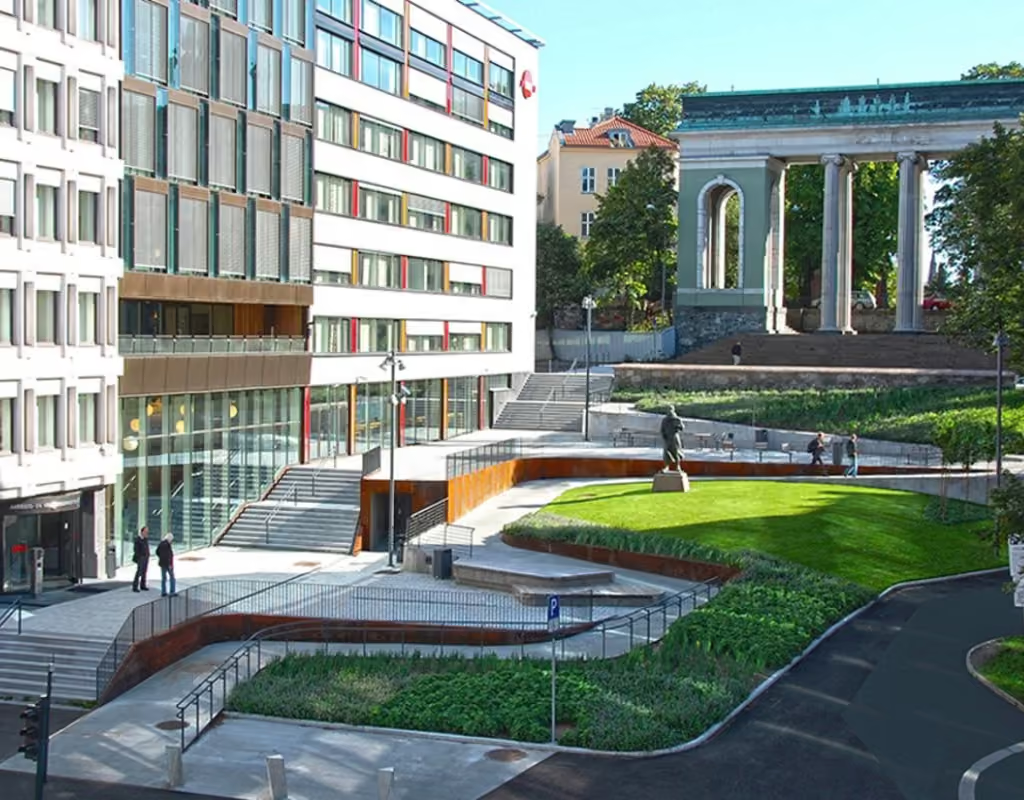
Schandorffs Plass
Schandorffs Plass in Oslo, Norway, is a small green public space designed for both movement through the city and quiet rest. Universal design shaped the project, with varied furniture and multiple ways to use and navigate the space depending on people’s needs and activities.
Read more about Schandorffs Plass here.
Egmont Højskolen
Egmont Højskolen in Denmark works actively with inclusive communities, addressing both physical surroundings and the social environment. Students with disabilities receive support from fellow students without disabilities, creating shared responsibility for adapting activities so everyone can take part.
More about Egmont Højskolen in the video below:
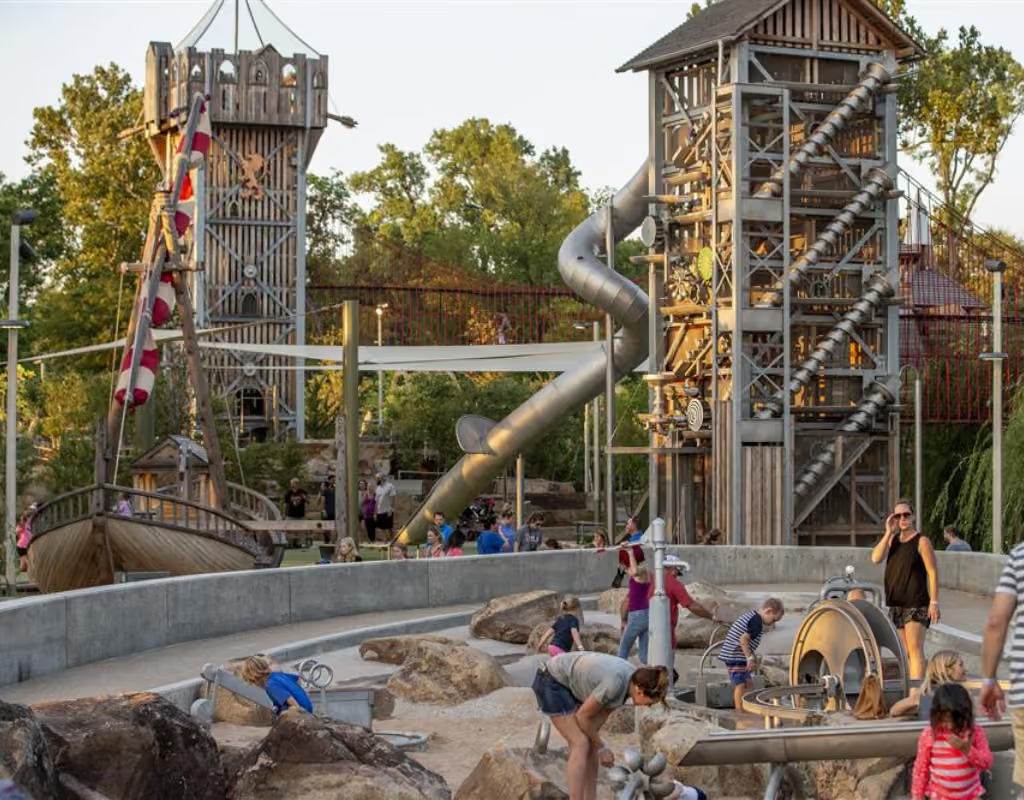
Forest Glen Park (Illinois) and The Gathering Place (Oklahoma)
ACTServices Inc. is a US accessibility consultancy focused on inclusive parks and outdoor recreation. Since 2010, they have helped make Forest Glen Park and The Gathering Place more accessible, with particular attention to children’s ability to experience nature and outdoor play.
Read more about the parks here.
Programmes
NEST
The Nest project in Aarhus, Denmark, combines strengths from special education and inclusive schooling. Children with autism spectrum disorder are included in smaller general education classes and taught using specialized pedagogical principles.
Read more the NEST programme here.
People Like Us
People Like Us is a Danish brewing company that makes craft beer while creating jobs for people from socially marginalized groups. By adapting work to people, the company aims to challenge ideas of normality and build more inclusive communities.
Read more about People Like Us here.
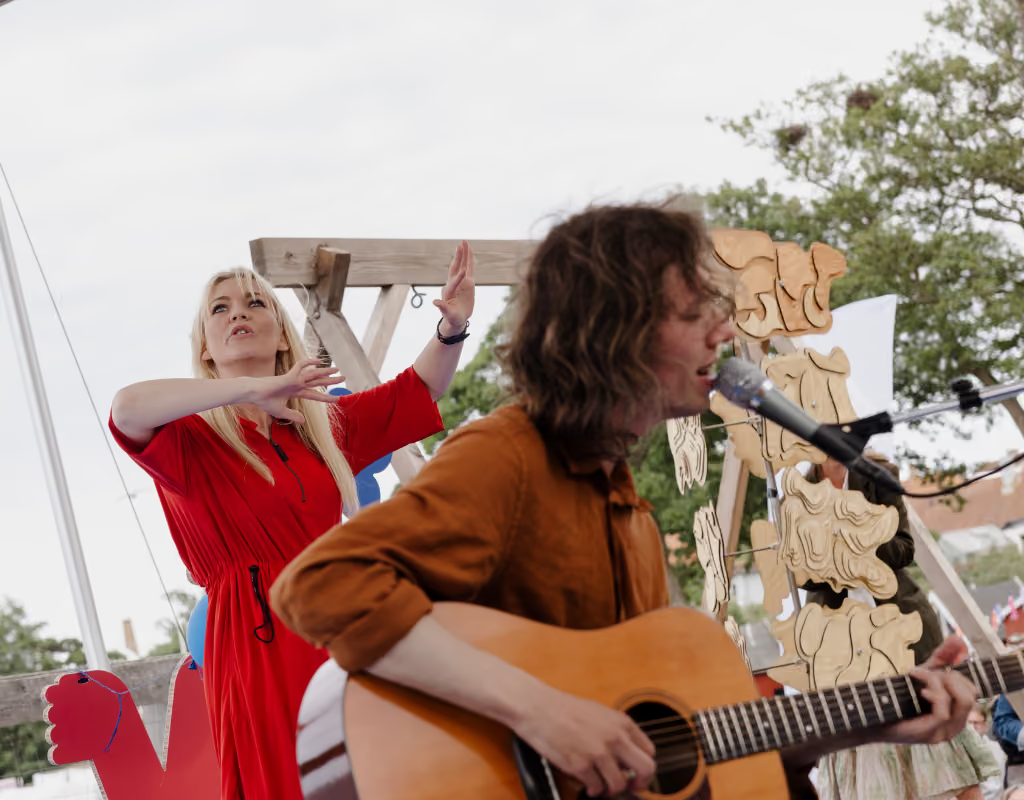
Folkemødet Universal Design-Concert
At Folkemødet on the Danish island Bornholm, universal design was explored through debate and a concert designed to include as many people as possible. The event used concrete measures to show how environments and experiences can be made more inclusive.
Read more about the concert here.
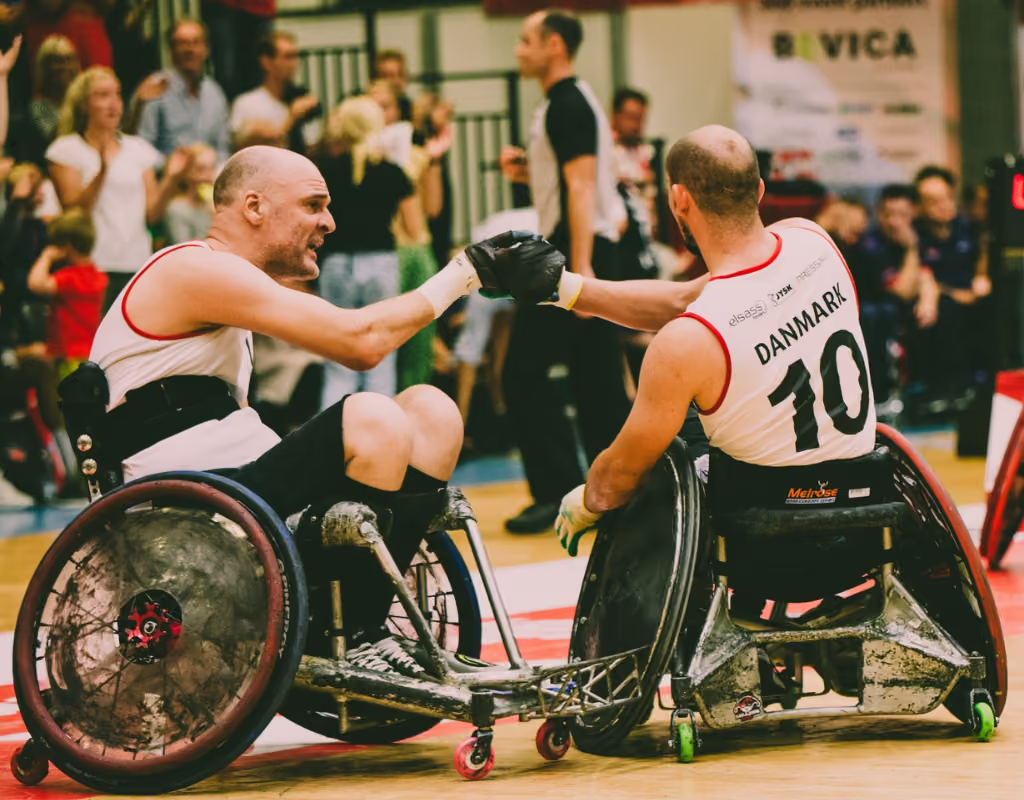
Wheelchair Rugby
Wheelchair rugby is a full-contact team sport for para-athletes of any gender. Players carry the ball across the opposing try line, and teams are balanced through a point system based on each player’s functional level.
Read more about wheelchair rugby here.
Novo Nordisk, Project Opportunity
Project Opportunity is an employment initiative that helps people with autism enter the labour market and use their skills professionally. Specialisterne supported Novo Nordisk in recruiting four autistic employees for roles where their strengths could create value.
Read more about Project Opportunity here.
Service
SubReader
SubReader is a platform that reads subtitles aloud for people who have difficulty reading them. It can be used with streaming services, in cinemas, and in schools, supporting children and adults with dyslexia or other reading challenges.
Read more about SubReader here.
Great Minority
Great Minority is a Danish media company focused on better representation of minorities, including people with disabilities. They offer video production, consulting, and training to help organizations communicate in more inclusive ways.
Read more about Great Minority here.
Alt Text Selfies
Alt Text Selfies is an exploratory project built around self-description and alternative text. Rather than only describing visual appearance, it invites people to include sensory details such as smell, taste, and sound as a way to connect across distance and different sensory experiences.
Read more about Alt Text Selfies here.
IBG
IBG, short for Interaktiv BorgerGuide, is a communication and planning tool for residential facilities, day care centers, and nursing homes. It helps citizens access daily information, resources, and activities in a clear and user-friendly way.
Read more about IBG here.
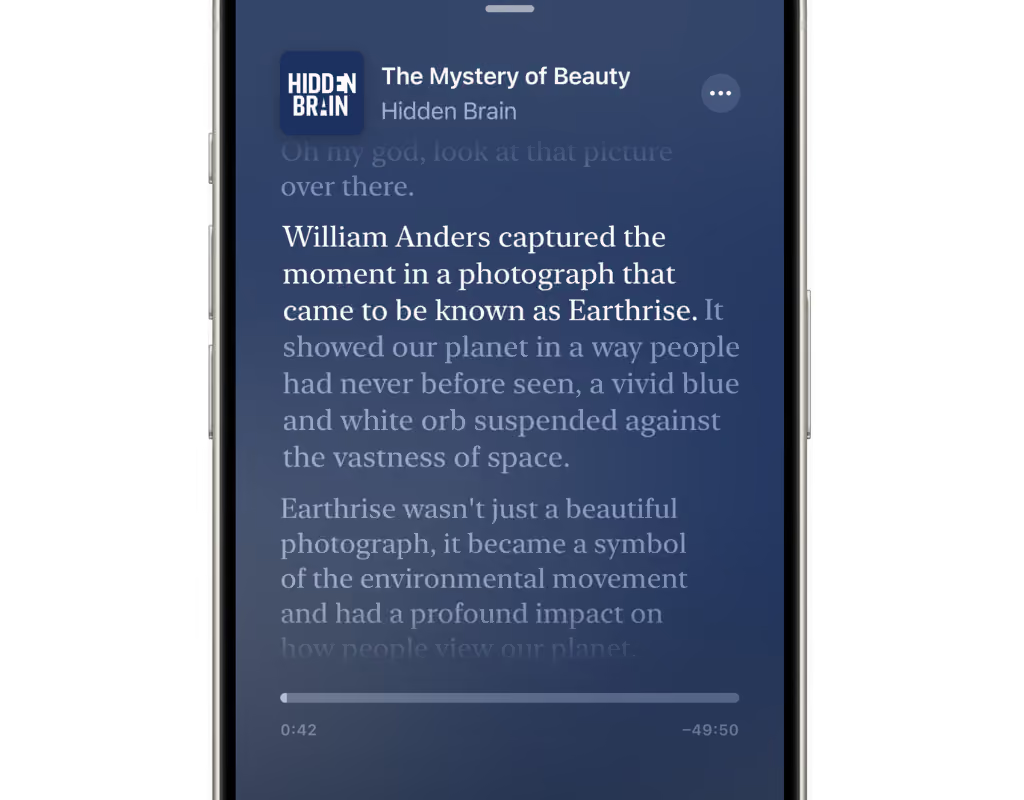
Apple Podcasts
Apple Podcasts has introduced transcripts to make podcast episodes easier to access. Listeners can read the episode text, search for words or phrases, and tap the transcript to play from a chosen point while words are highlighted during playback.
Read more about the feature here.
Workshop materials
After the Ideation and Creations workshops, you will find presentations and handouts here.
Important documents
We've collected all the important documents you need as a participant in the Bevica Scholarship Programme. Please find and download them below.
Terms and conditions
All you need to know about your participation in the Bevica Scholarship Programme
Universal design accommodations
In the Bevica Scholarship Programme, we ask participants to use universal design as a tool for creating a society for all. We also strive to practise what we promote by designing our workshops and activities to accommodate the diverse needs of our participants.