The Silent Norm: When society’s view of humanity turns disability into an individual problem

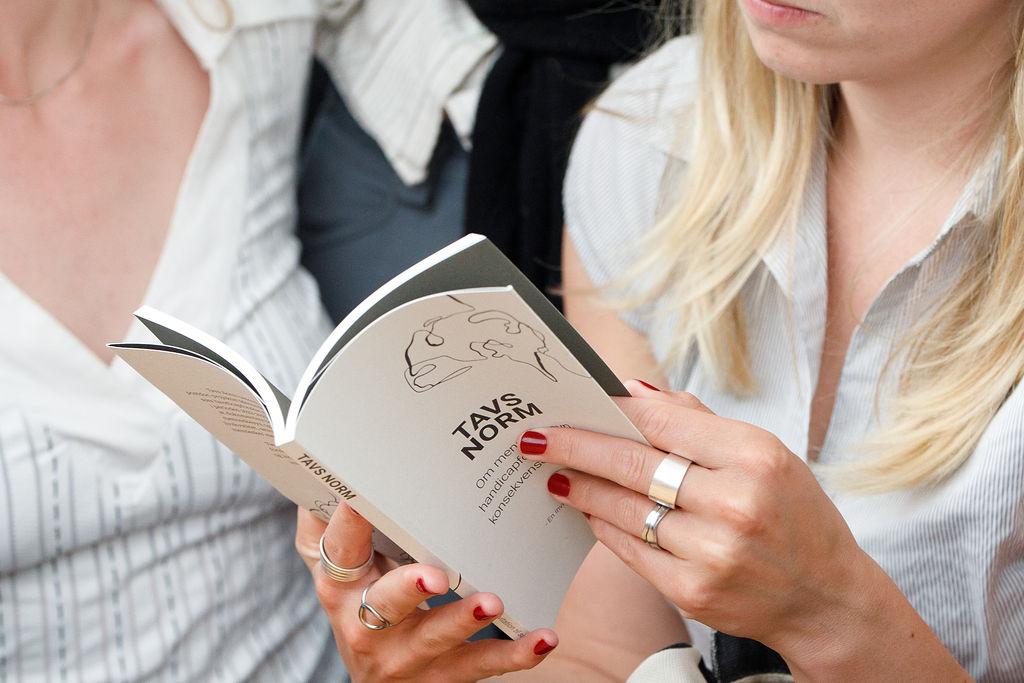
The publication Silent Norm from the Bevica Foundation puts words to the unspoken norm that shapes our understanding of disability, bodies, and equal participation — and points to universal design as a way to rethink the frameworks that currently make disability an individual problem.
Have we in Denmark silently agreed that the “normal” human being is able-bodied, self-reliant, productive, and without disability? This question is at the heart of the Bevica Foundation’s publication Silent Norm – On Views of Humanity, Understandings of Disability, and Their Consequences.
Denmark has ratified the UN Convention on the Rights of Persons with Disabilities and committed itself to the UN Sustainable Development Goals principle of Leave No One Behind. At the same time, the official Danish understanding of disability is based on the relational concept of disability: that disability arises in the encounter between people with functional variations and the barriers created by society. Nevertheless, people with disabilities continue to be disadvantaged when it comes to education, employment, well-being, and participation.
A norm with consequences
In the book, author and disability researcher Emil Falster introduces the concept of the silent norm: an invisible but guiding expectation of how people should look, function, and participate in society. The norm is silent because it is rarely expressed directly. Yet it shapes our language, institutions, legislation, pedagogy, urban spaces, and social relations.
Although Denmark officially relies on a relational concept of disability, individual and medical understandings of disability still dominate in practice. Disability is, to a large extent, understood as something located in the body, something to be compensated for, treated, reduced, or overcome.
The consequences are not only practical. They are also social and emotional. When society repeatedly signals that certain bodies and needs are “special,” people with disabilities may come to understand themselves as wrong, burdensome, or of lesser value. The publication shows how shame, guilt, and self-blame do not arise in a vacuum, but are shaped by the norms and systems people encounter throughout life.
Universal design as a solution
In the book’s epilogue, Camilla Ryhl, Research Director at the Bevica Foundation, points to universal design as a concrete proposal for how we can break with the silent norm. Universal design is about developing societies, solutions, and processes with human diversity as the starting point from the outset.
A central premise of universal design is that we all live with different and changing functional abilities throughout life. Universal design therefore challenges the idea of one “normal” user and one special group in need of adaptation. Instead of adapting the person to the framework, universal design invites us to rethink the framework — and thereby confront the silent norm in practice.
Read the book as pdf here - in Danish.
Silent Norm is primarily based on the postdoc project Views of Humanity and the UN Sustainable Development Goals, which Emil Falster carried out between 2022 and 2025. The project documents the significance of society’s view of humanity and how it affects quality of life, autonomy, and independence for people with mobility disabilities.
More knowledge about Universal Design
Explore the Bevica Foundation's Knowledge Library


Latest News
Follow the latest news from the Bevica Foundation below.
.png)