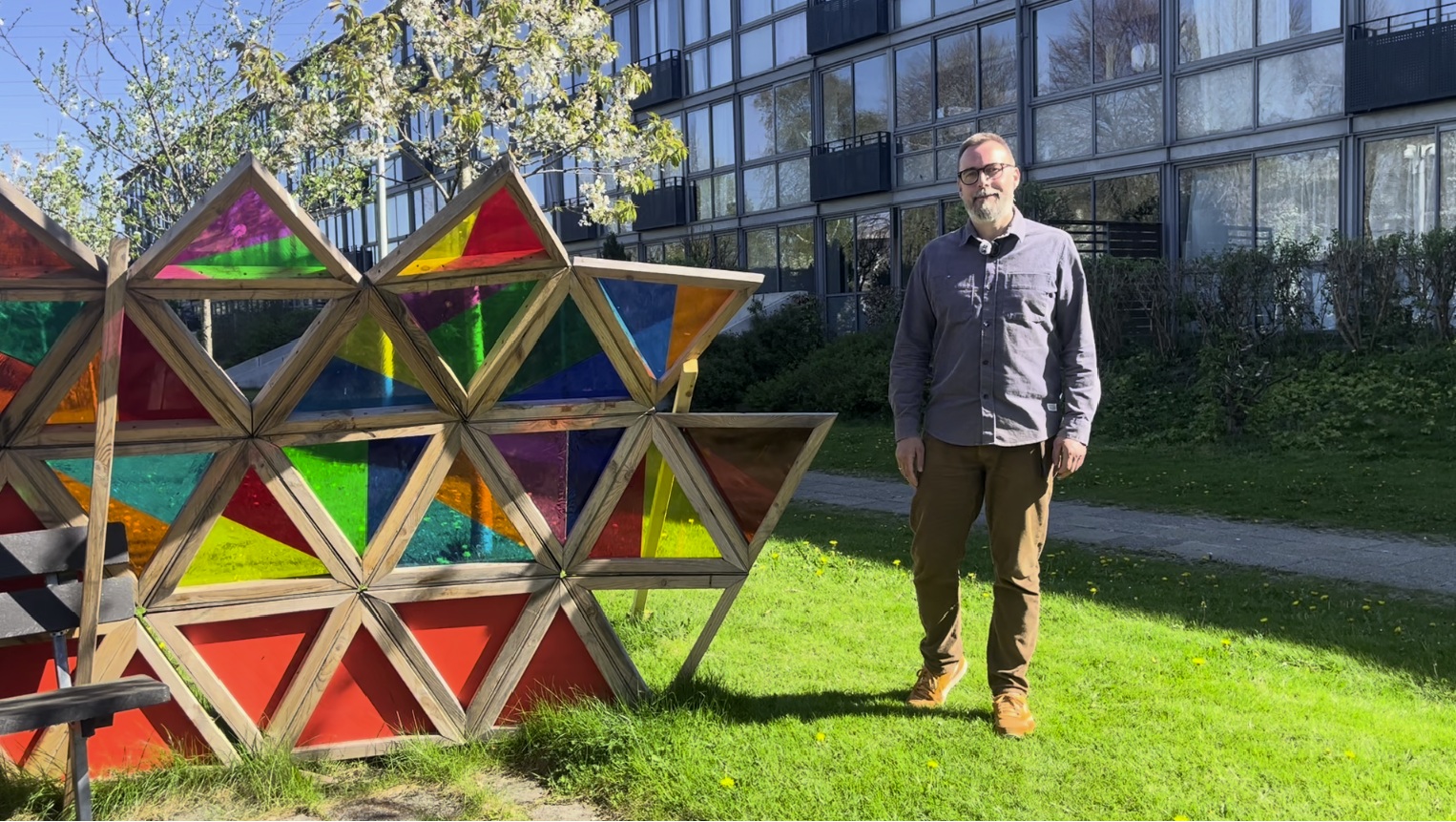
This is what universal design in urban spaces can look like

A raised planter bed, multi-level sandboxes, and a round table with space for wheelchairs, for example. These are some of the prototypes that have emerged so far from a research project on incorporating resident perspectives on universal design into the development of urban areas.
In the research project "Common Spaces – Life Between Buildings from a Universal Design Perspective," various examples of urban furniture have been built to demonstrate what universal design can look like in practice in urban spaces and residential areas.
In addition to a round table with room for seated individuals, strollers, walkers, and wheelchairs, the team has developed a tactile map and built multi-level sandboxes, a raised planter bed, and a dome-like privacy screen. Five prototypes that can be further developed.
"And it REALLY does matter how we design, because having the opportunity to participate at a round table like this also provides the opportunity to participate in communities and neighborhoods," says postdoc Carsten Hvid Nielsen from Aalborg University. He leads the project together with Professor of Urban Theory Ole B. Jensen, also from Aalborg University. Both are also part of the Bevica Foundation's interdisciplinary research network.
Developed in collaboration with residents
The prototypes were created in collaboration with people with disabilities. As an important part of the project, people with various functional abilities were invited on walks through the public housing area of Toveshøj in Aarhus to talk about the barriers they encounter in everyday life and how these barriers prevent them from participating in activities and communities in the area. For example, the barriers they encounter in the residential area's communal gardens, where residents can get their hands dirty and enjoy the pleasure of gardening together.
"One of the challenges pointed out is that all the activity takes place down at ground level. So, if you are a wheelchair user or have difficulty walking, it can be difficult to participate in these green communities," Carsten notes.
Based on the participants' experiences, perspectives, and needs, various prototypes of outdoor furniture were developed and tested by the participants. Their feedback showed that universal design makes a real difference in everyday life. This was evident, among other things, when testing a tactile map of the residential area—a map that blind and visually impaired people can decode through their sense of touch.
"We tested this tactile map with someone who is blind, and he told us that it not only helps him navigate and orient himself in the area, but that it also gave him a whole new sense of self, because now he could participate on his own terms," says Carsten.
The project receives support from the partnership between the Bevica Foundation and the Danish Building Fund and runs until the autumn of 2026, when a research report will be published that delves deeper into some of the experiments.
See the five prototypes so far and hear Carsten talk more about them in the videos here:
More info
Read more about the partnership between the Bevica Foundation and the Danish Building Fund
Carsten Hvid Nielsen is a member of the Bevica Foundation's research network.
Read more about Carsten Hvid Nielsen
Ole B. Jensen is a member of the Bevica Foundation's research network.
More knowledge about Universal Design
Explore the Bevica Foundation's Knowledge Library
.png)
Latest News
Follow the latest news from the Bevica Foundation below.
.png)