.png)
Designing in the dark: Ask the people it concerns
.jpg)

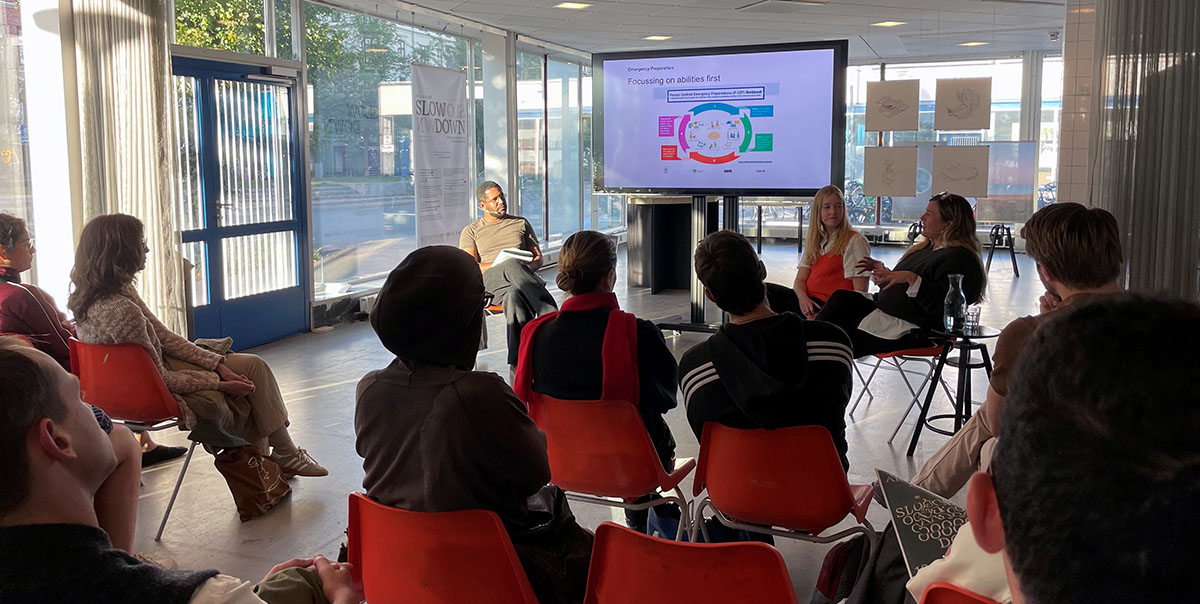
It is essential that we listen to users with lived experience of being outside the norm. Otherwise, we risk designing for only a small proportion of the population, which is good neither for business nor for society, says Christine Hemphill.
It is not possible to work with disability inclusion in an informed and meaningful way without incorporating the lived experiences of people with disabilities. This is the view of Christine Hemphill, founder and managing director of the consultancy Open Inclusion.
Christine Hemphill has a background in design and explains that, for several decades, she created solutions that excluded people. Not because she had bad intentions, but because she lacked the necessary insight.
“What we fail to do is listen in a fair and equitable way. There are groups in society who are rarely asked and rarely heard,” she says.
This means, she points out, that we are not listening to the entire market or target audience, but only to a very small part of it. As a result, we design for only a small proportion of the people who make up that market. This is not particularly effective, whether for a company developing a product, a public authority providing a service or a university offering education.
“If we do not ask the right questions thoroughly enough from the outset, and if we do not involve a broad enough range of the people whom the product or service is intended to benefit, we overlook important knowledge. It becomes our blind spot, something we do not understand. Yet we still try to create something for an area we do not fully understand. Sooner or later, that will backfire,” she emphasises.
She also stresses the importance of researchers from different disciplines working together, as they do in the Bevica Foundation’s interdisciplinary research network. Approaching a subject from a broad range of perspectives provides a much more complete understanding of what is being examined.
“I believe that every individual way of thinking has its limitations, just as every individual perspective on a problem is limited. This is why the interdisciplinary approach in the Bevica Foundation’s network is so important. It brings together many people with different perspectives, but also with different blind spots,” she says.
She sees an interdisciplinary approach, alongside intersectional and inclusive approaches, as a way of addressing some of the greatest challenges facing society today.
Open Inclusion
The consultancy Open Inclusion works to integrate disability and age inclusion into market research, design and innovation. It helps companies and organisations create better and more accessible products and solutions through user involvement, with a particular focus on people with disabilities and older people.
Learn more about Open Inclusion on its website:
More knowledge about Universal Design
Explore the Bevica Foundation's Knowledge Library

Latest News
Follow the latest news from the Bevica Foundation below.
.png)