The city has specific ideas about who we are – and that often comes at the expense of those who fall outside the norm

If you have a disability, it is nearly impossible to do anything about it if you get frustrated by Copenhagen’s cobblestone streets and cannot get around in your wheelchair. This is the view of Ole B. Jensen, a professor at Aalborg University who researches what and who our cities are built for, and he explains how the city can end up becoming an enemy to some people.
Imagine Copenhagen – or any other city, for that matter. The details have been carefully considered; there are cobblestone streets and benches where people sit and enjoy a quiet moment. It is a classic image that most people would not immediately perceive as being specifically designed for certain people. But it is, explains Ole B. Jensen, a professor at Aalborg University.
"The thing about a bench and a space is that they actually have an idea about us. The way our bodies occupy space is not just our own will. It is also about taking what is in the space; meaning, if benches are placed in a certain way and have a certain height, there is an idea about who is able to use them."
Ole B. Jensen researches urban design and in 2026 wrote the book Mobility Injustice by Design, which, based on three primary target groups—people experiencing homelessness, people with disabilities, and the elderly—examines how urban design can be exclusionary and even hostile.
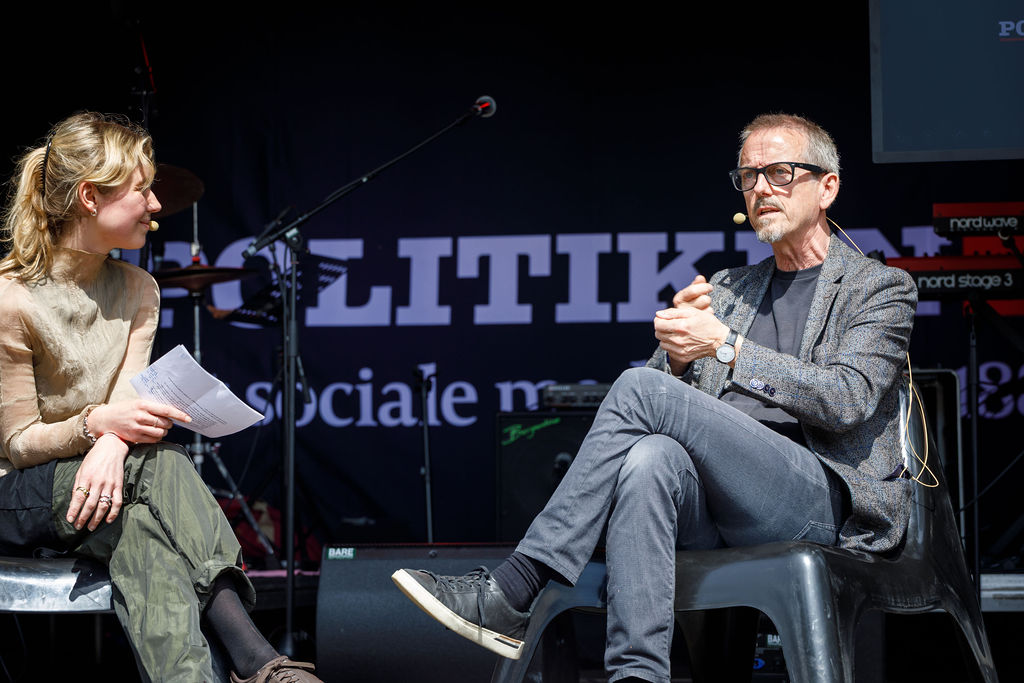
In connection with the 2026 People’s Meeting, Ole B. Jensen participated in a special edition of Du lytter til Politiken, where he expanded on his perspectives on hostile design.
"What you should notice when walking around a city is what it invites you to do. And when you have the ability to change shoes and the ability to walk up stairs, you don't think much about the fact that there might be a high curb, that there might be a 'green wave' you have to run across to make it over the street, or that a bench has been removed or had an armrest installed in the middle so you can't lie down and sleep there," he explains, using these examples to show how cities are experienced very differently depending on one's starting point.
The atmosphere of rejection
When we walk around a city, we experience it for what it offers us, explains Ole B. Jensen. It has, so to speak, ideas about us as users. And if the user does not fit into that idea, it pushes us away. And sometimes that is not intentional.
"No one builds high curbs on purpose to prevent people from crossing the street or getting around in a wheelchair, but there are certainly people who install armrests or remove sleeping options for the homeless to get rid of them."
Ole B. Jensen talks about the atmosphere of rejection:
"The atmosphere of rejection is really about things telling us that we should leave and go away. This applies to people experiencing homelessness, but it actually also applies to people in the other groups. When they discover that they cannot get up the stairs, or cannot get inside, or face other challenges, they feel that the city is asking them to disappear or go away."
Ableism and the bodily norm
This atmosphere of exclusion, explains Ole B. Jensen, often rests on a narrow understanding of the human being, which means that, without thinking about it, we end up designing cities for an average that many fall outside of. In disability studies, the concept of ableism refers to the favoring of the capable, normally functioning body, which is also at play in the design of our cities, says Ole B. Jensen.
"The common denominator is that these spaces have an idea of who the 'right' users are and who are not," he explains, and continues.
"If the city is designed in such a way that it’s difficult to get into a restaurant in a wheelchair, difficult to cross the street quickly, or difficult to find a place to sleep, then it is being shaped on premises that exclude certain groups."
However, Ole B. Jensen notes that it is not as if a single, cold logic dictates who we welcome into urban spaces and who we exclude. On the contrary, our cities have evolved over time, and we are, so to speak, standing on the layers of decisions and urban planning from the past.
Listen to the full interview with Ole B. Jensen in You are listening to Politiken right here.

More knowledge about Universal Design
Explore the Bevica Foundation's Knowledge Library
.png)
Latest News
Follow the latest news from the Bevica Foundation below.
.png)