Through the back entrance and across the service yard: Why can visitors with a disability still not enter through the main entrance to our shared cultural heritage?

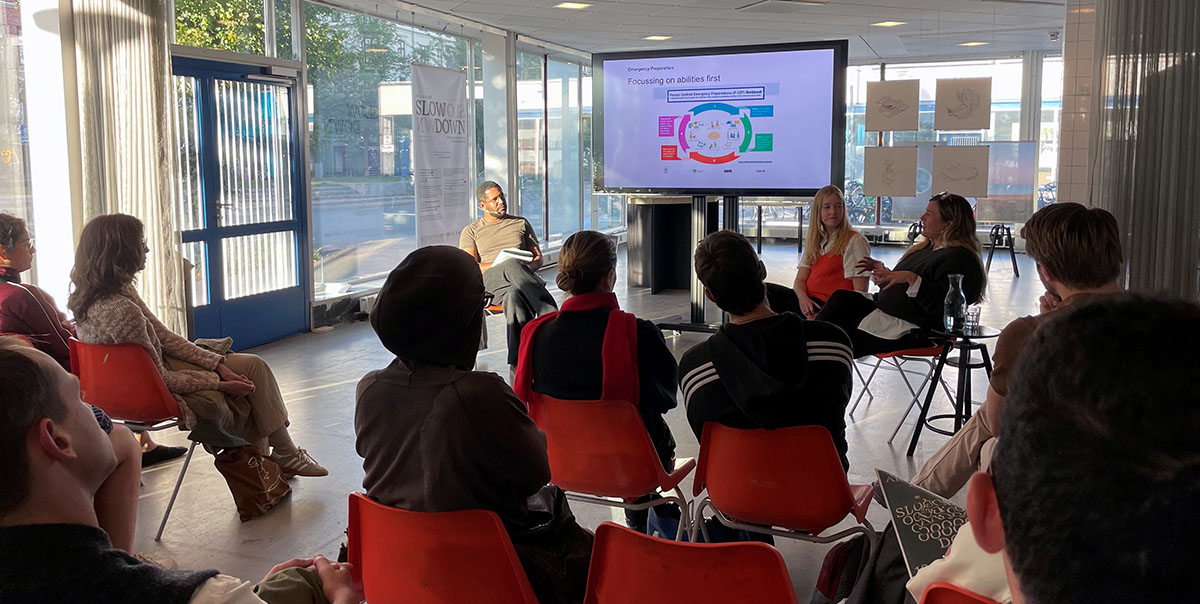
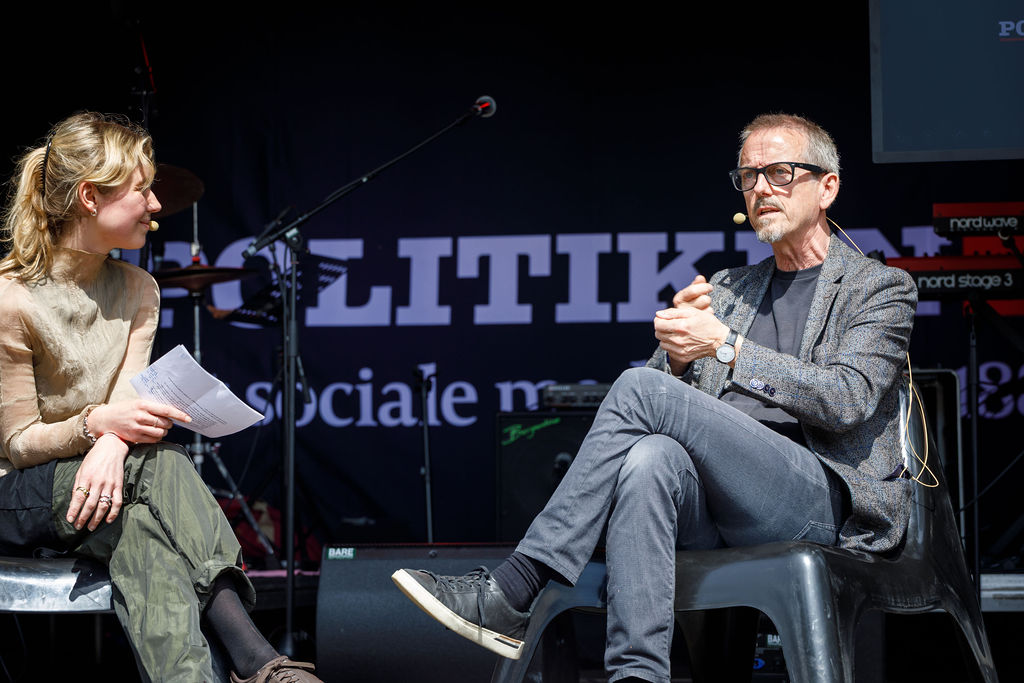
In a special episode of the Danish Architecture Center’s podcast Byen forfra, you can listen to Caspar Eric, poet and disability activist; Pil Høyer Thielst, architect and partner at the architecture firm Lundgaard & Tranberg; and Martin Høgstedt Poulsen, Project Director at the Glyptotek, discuss how we can make our cultural heritage accessible to everyone. The conversation grew out of a collaboration between Pil Høyer Thielst, Caspar Eric, and Camilla Ryhl from the Bevica Foundation.
In 2024, the UN Committee on the Rights of Persons with Disabilities issued sharp criticism of Denmark’s lack of action in ensuring equal access for people with disabilities to public life and the public realm—including our shared cultural institutions.
This became the starting point for a collaboration in which the Bevica Foundation, together with the architectural firm Lundgaard & Tranberg and poet and disability activist Caspar Eric, developed a conceptual case exploring what one of the strongholds of Danish cultural life—the Ny Carlsberg Glyptotek—might look like if it were reimagined through universal design and made accessible to all bodies.
The case was first published as an opinion piece in Byrummonitor and was later used as the basis for a conversation between Pil Høyer Thielst, Caspar Eric, and Martin Høgstedt Poulsen from the Glyptotek.
Listen to the podcast here (in Danish):
Rejected by Architecture
Glyptoteket, founded in 1897, was built by Carl Jacobsen—“the brewer who loved staircases.” The aim was noble: everyone was now to have access to art, which until then had been reserved for a narrow elite of the wealthy upper bourgeoisie. But the definition of “everyone” at the time was based on a very narrow understanding of the human body, and the brewer’s love of staircases now stands as a very real rejection of bodies that cannot use stairs.
At the Glyptotek, if you cannot use the steep granite staircase at the main entrance, you must instead find various side entrances — which are, moreover, different depending on which exhibition you wish to see. Here, you have to ring a bell and wait to be escorted through a labyrinth of service yards and back offices. It is precisely this experience that Caspar Eric points to in the podcast, after having taken the winding back routes through the Glyptotek several times.
“Accessibility isn’t just about everyone being able to enter a building. It’s also about what the building is saying—well, who exactly is ‘everyone’? And maybe around 2025, roughly 200 years later, it’s a good time to start talking about whether the definition of ‘everyone’ might have changed,” asks Caspar Eric.
People with disabilities are not a minority in today’s Denmark. We know from VIVE – the Danish Center for Social Science Research – that 30 percent live with a self-reported functional impairment, and 67 percent live with a disability or are close relatives of a person with a disability.
At Glyptoteket, there is awareness of the challenges posed by poor access for people with disabilities or functional variations. In connection with an upcoming renovation of the building, they are therefore working to integrate universal design into access routes and spaces for staying in the historic staircase hall.
Universal design is also the guiding principle behind the conceptual case developed by the Bevica Foundation, Lundgaard & Tranberg, and Caspar Eric for a new main entrance, where a large accessible ramp serves as the primary route of entry: a shared and equal access route that visitors with and without disabilities can all use.
If you would like to read more about the shared vision by Caspar Eric, Pil Høyer Thielst, and Camilla Ryhl, you can do so via the website of Lundgaard & Tranberg Architects here.
More knowledge about Universal Design
Explore the Bevica Foundation's Knowledge Library
.png)
Latest News
Follow the latest news from the Bevica Foundation below.
.png)