Wheels First: Egmont Højskolens activity park demonstrates universal design in practice

A new movement park at Egmont Højskolen shows how universal design can create spaces for movement, nature and community across bodies, functional abilities and individual circumstances.
How do you create an outdoor movement area where everyone can take part – whether they walk, run, use a wheelchair or move in other ways?
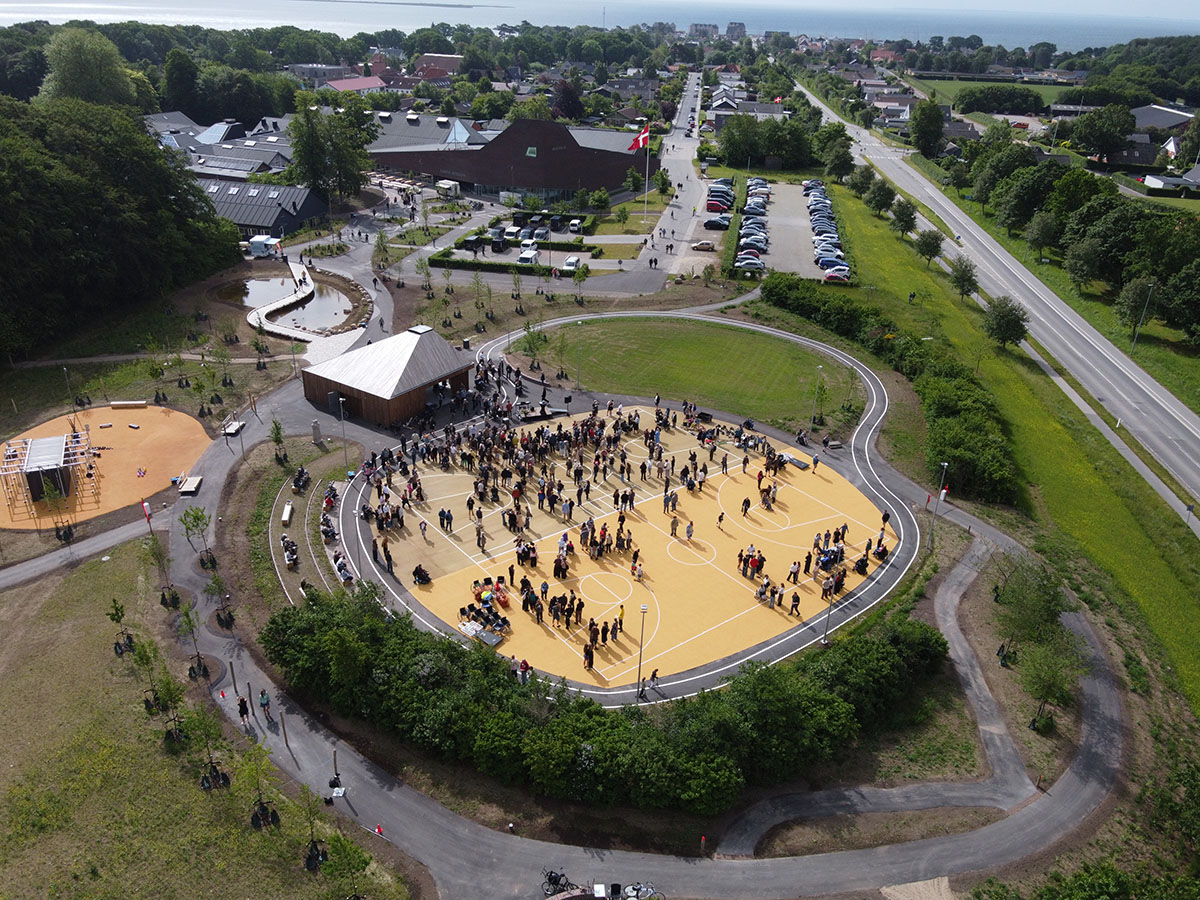
This question has been central to the development of Egmont Movement Park, which was officially inaugurated on 5 June 2026, the same day Egmont Højskolen celebrated its 70th anniversary. The park has been created with the ambition of making movement, nature and community accessible to more people.
Wheels Before Legs
Many outdoor activity areas are created based on an idea of the walking, running and able-bodied user. This means that people with varying functional abilities often encounter barriers before the activity even begins: uneven surfaces, steep inclines, narrow passages or activities that can only be used in one particular way.
At Egmont Movement Park, the starting point is different. Here, the principle that “wheels come before legs” has been central. This does not mean that the park is only designed for wheelchair users. It means that, from the beginning, the design takes into account that people move in many different ways, and that solutions that work for some often create better access and more opportunities for many others.
If an area works for people who use wheelchairs, walkers or other assistive devices, it often also works well for children, older people and, for example, people with temporary injuries. This is a fundamental idea in universal design: to create solutions that can be used by as many people as possible without identifying anyone as a “special” user.
From Access to Participation
At the same time, universal design is not only about being able to enter an area. It is also about being able to participate once you are there, use your body, be part of the community and choose between different ways of being active.
This is why Egmont Movement Park is more than an accessible path system. The park includes activity and rest zones where movement, play, sport, conversation and nature experiences can take place side by side. The ambition is to create an outdoor space where people with different functional abilities, ages and life circumstances can meet through shared activities, without anyone being assigned the role of spectator from the outset.
The park stands as a strong example of how universal design can create the framework for a more inclusive society. It shows that access to movement and nature is not only about physical accessibility, but about the right to take part, use one’s body, meet others and participate in the community.
When wheels come before legs, it does not limit possibilities. It expands them.
More knowledge about Universal Design
Explore the Bevica Foundation's Knowledge Library

Latest News
Follow the latest news from the Bevica Foundation below.
.png)