.jpg)
When AI has a blind spot towards human diversity, we are less prepared for the future

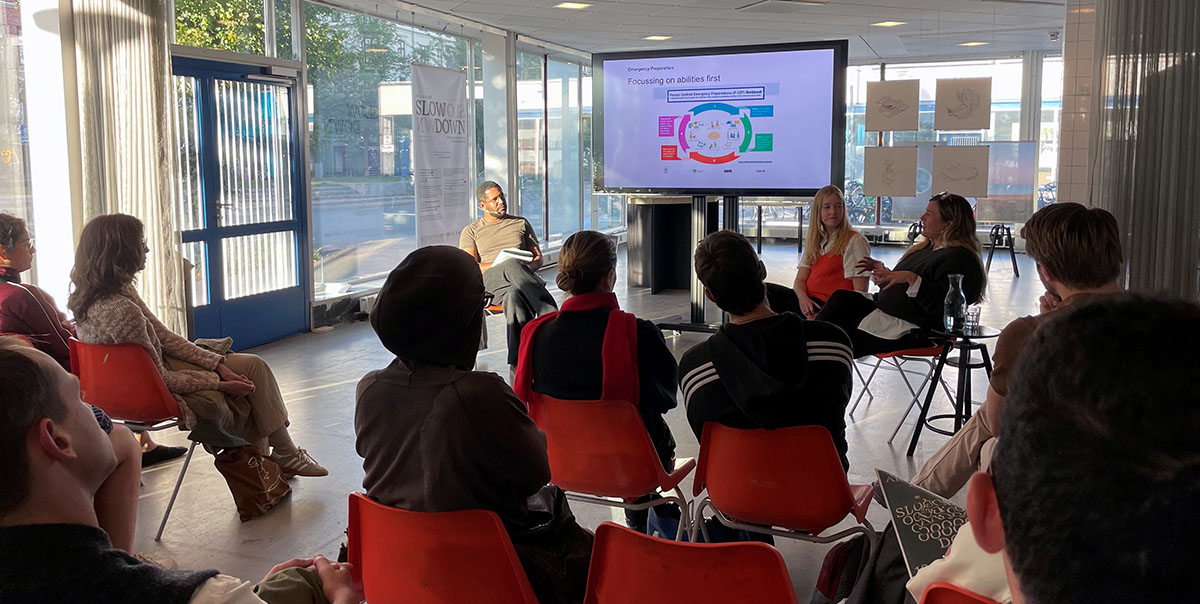
The rapid development of artificial intelligence risks creating a dangerous homogenisation of our societies, because it intensifies an idea of the average human being and is blind to the diversity in which people exist. This is according to Jutta Treviranus, who is, among other things, Director of the Inclusive Design Research Centre (IDRC), whom we met in Oslo in connection with UD24
Artificial intelligence is widely seen as an efficient and neutral tool that can optimise decision-making, shorten work processes, and create fairer systems in an increasingly technological world. But according to Jutta Treviranus, Director of the Inclusive Design Research Centre (IDRC) and Professor at the Faculty of Design at OCAD University in Toronto, many of the dominant forms of AI carry a fundamental risk of repeating historical ideas about what is considered “normal” and that what is “different” should be filtered out, hidden, or fixed.
The large language models used by major AI developers today are built around what is historically familiar and expected as “correct”, and they therefore end up reinforcing what is typical and average.
“AI is intensifying the average. It’s basically reproducing the typical, the predictable, and thereby removing anything that is outlying or is unusual.”
This means that “difference” is systematically at risk of being filtered out when technologies are designed to favour the average. Treviranus points out that this kind of logic, whether artificial or not, bears an unsettling resemblance to the mechanisms underlying eugenics1. She stresses that this is not eugenics in its historical ideological form of heredity and racial hygiene, but rather that when AI systems are trained to identify patterns based on historical data, they often end up reproducing past norms and inequalities, thereby creating a clear division between what is considered, for example, “correct” and “incorrect” bodies.
“If you want innovation, you talk to people who need change. Who have to do things in a different way that cannot depend upon everything working for them.”
When The Bevica Foundation looks at Jutta Treviranus’ message through the lens of universal design, the relevance of the concept becomes clear. Universal design is not about adapting systems to an idealised average, but about creating flexible solutions that can accommodate diversity from the outset. Diversity in user needs requires diversity in solutions. In the encounter between AI and universal design, a crucial question emerges.
“If we design the world with people who are struggling, it will work for us when we inevitably will be struggling.”
The Bevica Foundation met Jutta Treviranus at the UD2024 conference in Oslo.
1Eugenics refers to any attempt to alter or improve the composition of the human gene pool in future generations by increasing the number of children among those believed to carry favourable genes, known as positive eugenics, and/or by preventing childbirth among those claimed to carry harmful genes, known as negative eugenics. - www.lex.dk
More knowledge about Universal Design
Explore the Bevica Foundation's Knowledge Library

Latest News
Follow the latest news from the Bevica Foundation below.
.png)