Inclusion Talks: Museums shouldn't just be accessible – they should be inclusive

In this episode of Inclusion Talks – A Universal Design Perspective, we explore how museums and cultural institutions can use universal design to create experiences where more people can participate, contribute and recognise themselves.
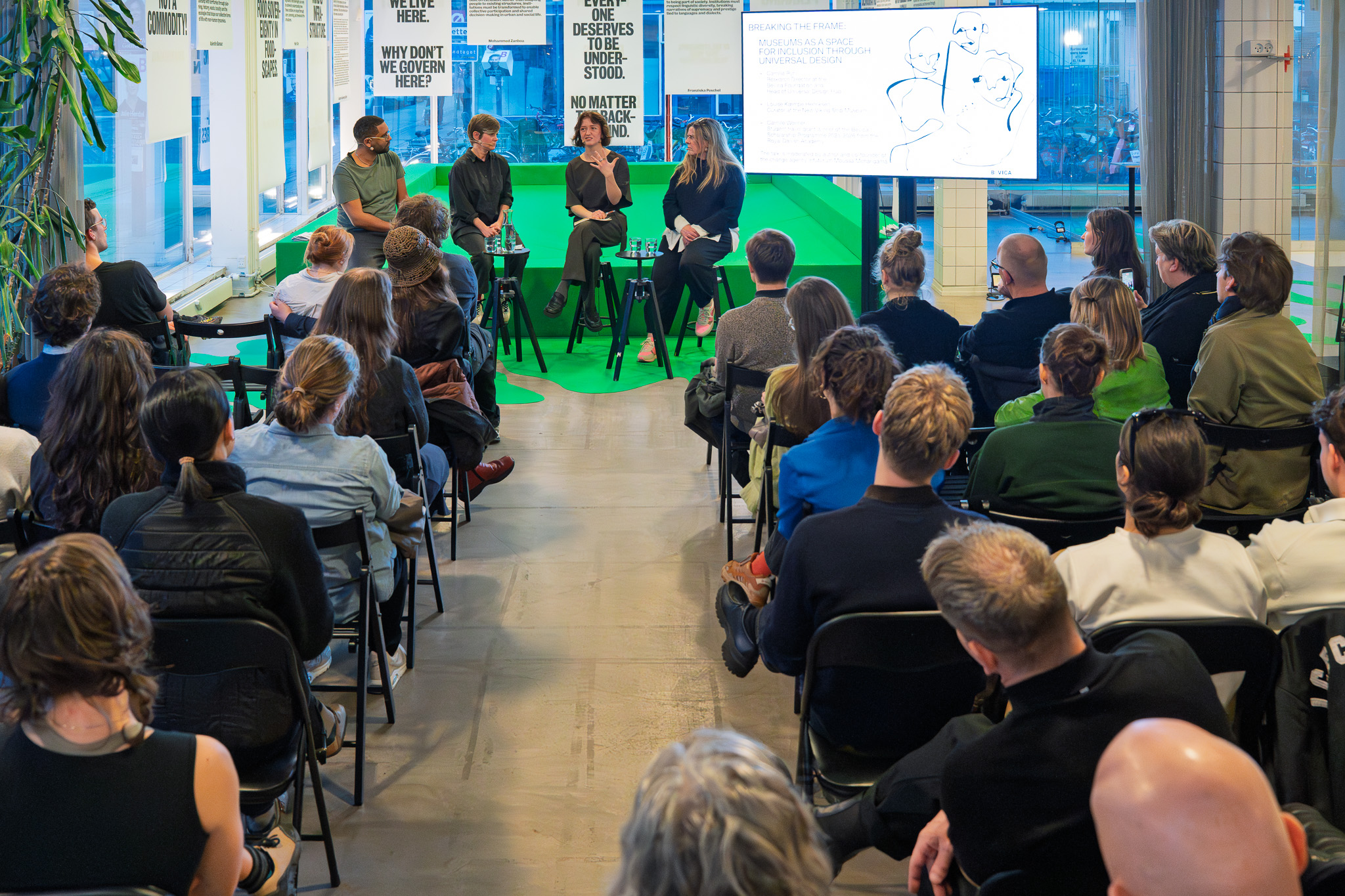
Host Moussa Mchangama speaks with Camilla Ryhl, Research Director at the Bevica Foundation and Head of Universal Design Hub, Louise Kæmpe Henriksen, curator at the new Viking Ship Museum, and Camille Wenner, student at the Royal Danish Academy and recipient of the Bevica Scholarship Programme Student Travel Grant 2025–2026.
Listen to the podcast here:
Museums Shape Our Shared Narratives
The conversation focuses on the role of museums and cultural institutions in creating shared narratives. Museums are not neutral spaces. They help shape our understanding of history, culture and community. But many museums are still designed around an idea of a particular type of visitor – and this means that people with different bodies, functional abilities and experiences do not always have access to the same experience.
In the conversation, Camille Wenner points to an important distinction between accessibility and inclusion:
"Accessibility and inclusion are not synonyms, becauseaccessibility means that you can get to the experience. But inclusion meansthat it's a multimodal, synchronous way of actually experiencing it in an equalway for everyone. So when we look at accessible museums that we now have inDenmark, and inclusive museums, we're not quite there yet."
Inclusion is about being able to take part in the museum experience in equal ways. A museum can have ramps, lifts and access conditions in place – and still fail to make the exhibition itself, the narrative and the cultural experience accessible to more people.
Universal Design Is About Multiple Ways of Participating
This is precisely where universal design becomes relevant. Camilla Ryhl describes universal design as a value-based design concept based on the understanding that all people live with different and changing functional abilities throughout life. Universal design is therefore not about special solutions for a particular group, but about considering human diversity from the beginning.
In the conversation, Camilla Ryhl points out that there is no single solution that works for everyone, but that “different user needs require different solutions”. In museum practice, this can mean that narratives should not only be seen, but also heard, touched, sensed and understood in multiple ways. This can create better experiences for people with visual or hearing impairments, neurodivergent visitors, people with mobility impairments and many others who experience and learn in different ways.
Ryhl points out that more cultural institutions are seeking knowledge about how museum experiences can become more inclusive. And here it is important to remember: “We will never reach the perfect goal. But we can do so much better than now. Just begin somewhere – just start,” she says.
Universal Design in Practice at the Viking Ship Museum
In the conversation, Louise Kæmpe Henriksen talks about the ongoing work at the new Viking Ship Museum in Roskilde, where the ambition is to integrate universal design into the entire museum experience – from exhibitions and interpretation to the café, the museum shop and encounters with staff.
The work shows how important it is to involve knowledge and lived experience early in the process. As Louise Kæmpe Henriksen describes, focus groups with people with different functional abilities have already revealed blind spots that the museum itself had not noticed. In this way, universal design does not become a solution added at the end, but a method for developing the museum along the way.
From Access to Real Participation
At the same time, the conversation points to a broader issue: an inclusive museum is not only about accessibility, but about the opportunity to take part in the museum in multiple ways. Universal design is therefore not a final answer, but a practice that requires knowledge, courage, curiosity and a willingness to make mistakes along the way.
This is exactly why museums have great potential. When they work with universal design, they can become shared spaces where more people can recognise themselves, participate and help shape the narratives we share.
The podcast series Inclusion Talks – A Universal Design Perspective has been developed in collaboration with Copenhagen Architecture Forum.
In the podcast, you will meet
Camille Wenner: Student at the Royal Danish Academy and recipient of the Bevica Scholarship Programme Student Travel Grant.
Louise Kæmpe Henriksen: Curator at the new Viking Ship Museum in Roskilde.
Camilla Ryhl: Research Director at the Bevica Foundation and Head of Universal Design Hub.
Moussa Mchangama: Host of the podcast, author, strategic facilitator and co-founder of In Futurum.
More knowledge about Universal Design
Explore the Bevica Foundation's Knowledge Library
.jpg)

Latest News
Follow the latest news from the Bevica Foundation below.
.png)