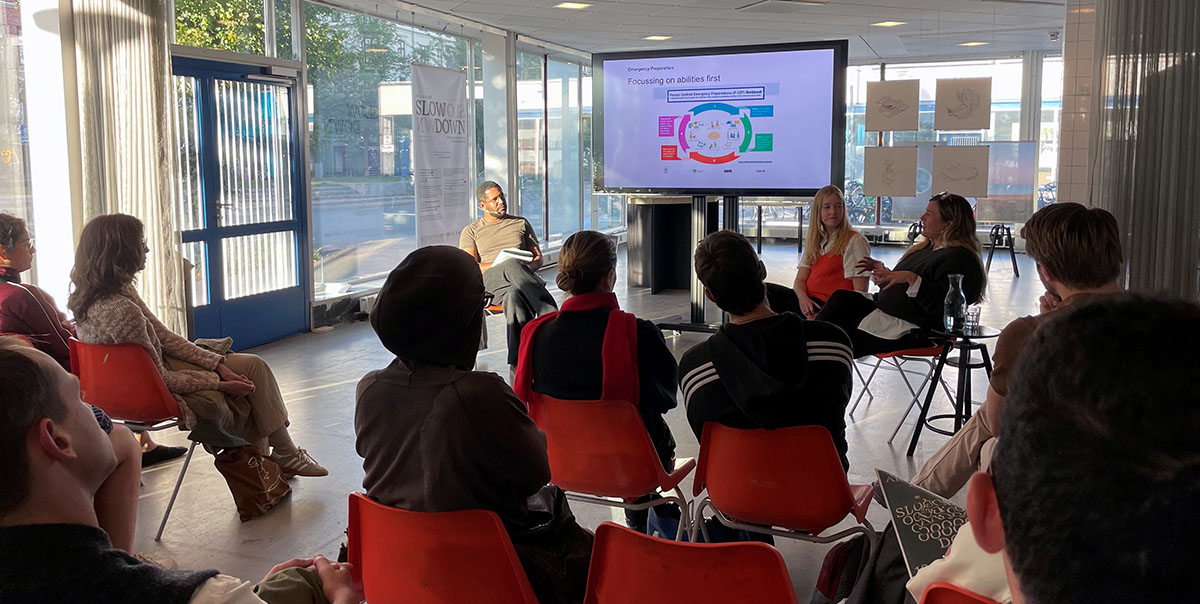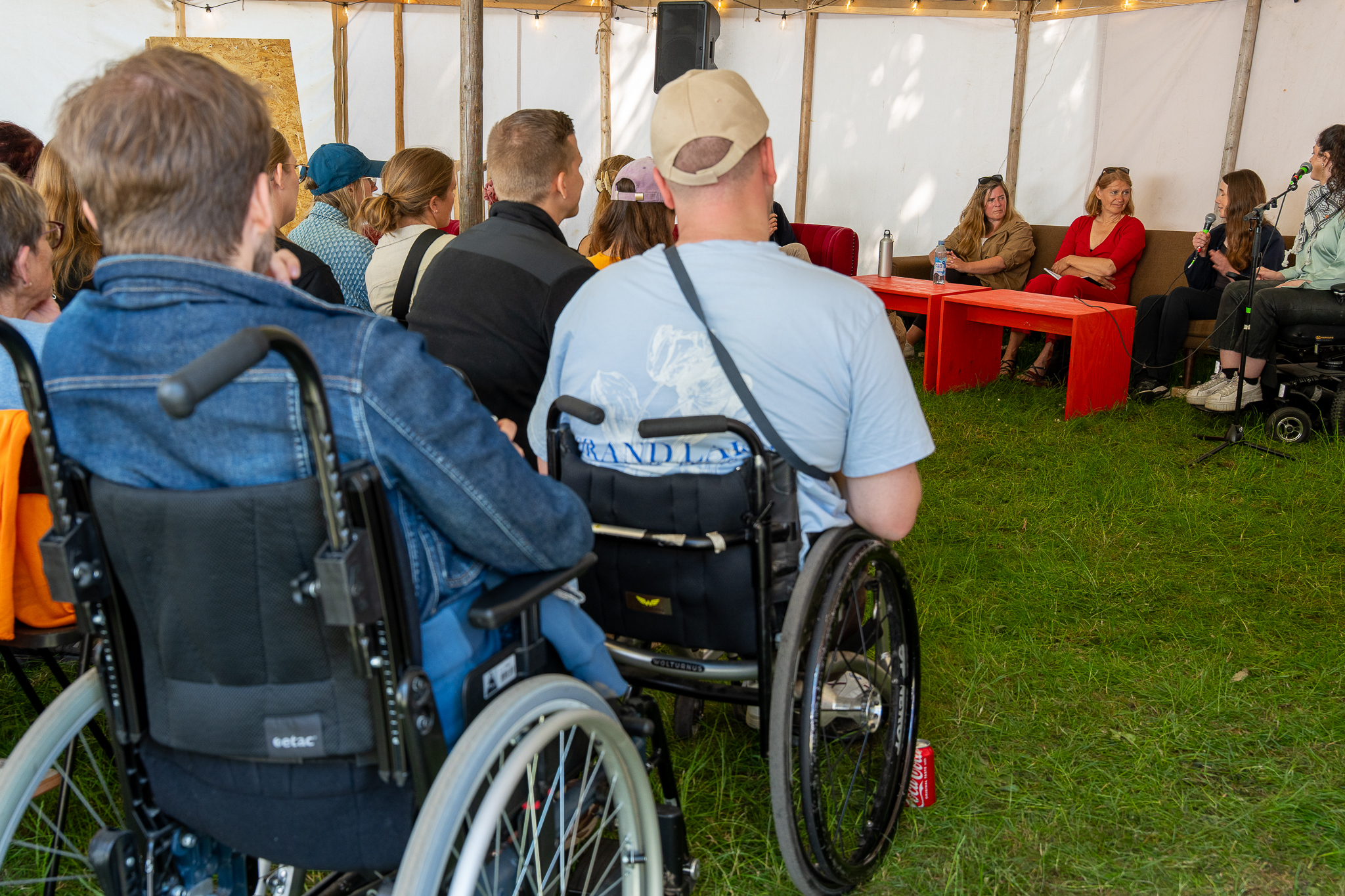
On tour with SUMH: The People's Meeting (Folkemødet) seen through UD glasses

A walk and talk between the Bevica Foundation and the Association of Young People with Disabilities (SUMH) at Folkemødet examined how accessibility, universal design and frameworks affect who has the opportunity to participate in the democratic conversation, and why universal design is crucial if more voices are to be heard.
How does it feel to participate in Denmark's largest democracy festival if you can't take the microphone, find your way through the crowd or read where there is room to retreat? This issue was the focal point when the Bevica Foundation together with the Association of Young People with Disabilities (SUMH) invited to a walk and talk at Folkemødet.
The People's Meeting is a place where democracy plays out in practice. Here it becomes clear that participation is not only about will, but also about framework. Design and formats have a bearing on who feels invited into the conversation and who stands on the sidelines when accessibility and universal design are not thought of from the beginning.
In a walk and talk, the Bevica Foundation focused on universal design as a fundamental prerequisite for equal participation. The conversation was based on the fact that accessibility and universal design are not a special concern, but a quality criterion that strengthens the community and the conversation for all. Not just for people with disabilities, but for anyone who may experience barriers in the encounter with complex spaces, high pace and fixed expectations of how to participate.
Watch and hear the conversation between Mads Stampe, Head of Public Affairs and Communications at the Bevica Foundation, Ida Lildballe, Member of the Board of Directors at SUMH, and Molly Mørup Sønnichsen, Student Assistant at SUMH.
More knowledge about Universal Design
Explore the Bevica Foundation's Knowledge Library
Latest News
Follow the latest news from the Bevica Foundation below.
.png)