Lene Dammand Lund: Universal design is a common condition — not a special concern
At Bevica Fonden, we use advanced AI-based translation tools to make our Danish content accessible in English. However, some content – particularly academic articles and nuanced texts – require a level of linguistic accuracy and subject-specific precision that automated tools cannot yet guarantee.
This is why this article is available only in its original language (Danish). We have chosen not to offer an English version in order to preserve the integrity, clarity, and scholarly intent of the original work.
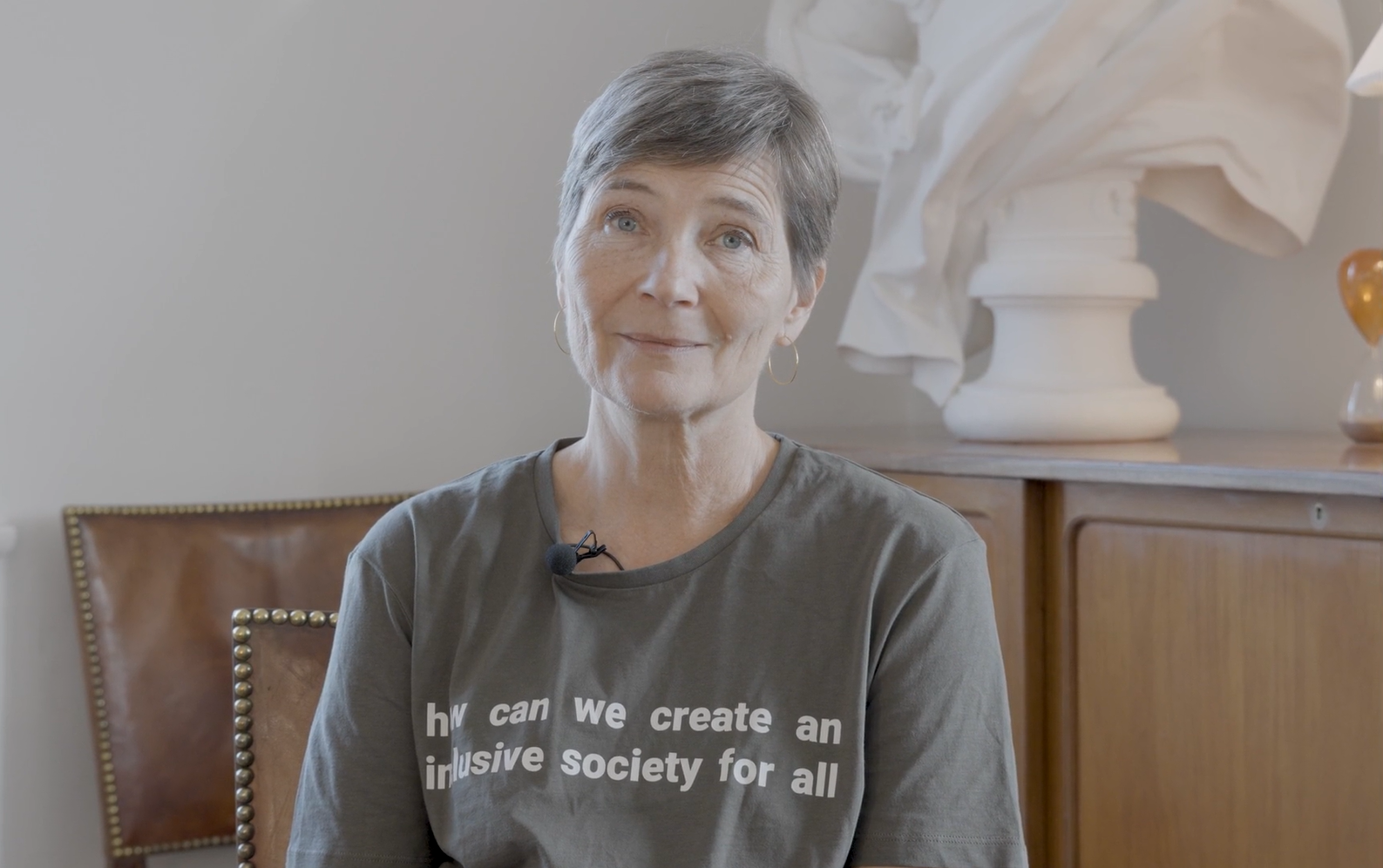
When we design our physical surroundings, it is crucial that we remember who we are designing for. Universal design isn't about taking special care of a small marginalized group -- it's about all of us. This is the starting point for Lene Dammand Lund, rector of the Royal Academy and ambassador for the Bevica Scholarship Programme.
Universal design should therefore not be viewed as an addition to architecture and design but as a fundamental part of good design. This is the belief of Lene Dammand, Rector at the Royal Danish Academy, who is also the new Ambassador for the Bevica Scholarship Programme.
Architects and designers work every day to translate societal values into physical spaces – values such as openness, democracy, and inclusion. The desire to create inclusive environments is deeply embedded in the profession, which is why universal design and the knowledge that emerges from the Scholarship Programme are so relevant.
“We all experience functional impairments at some point in life. When we design with universal design as a principle, we’re doing something good for all of us.”
Sustainability, fewer square meters — and space for everyone
Dammand shares that many students at the Royal Danish Academy today want to contribute to a more sustainable society, and universal design is an important tool in this regard. If we are to create a society that works for everyone, interdisciplinarity is key, she believes. This is because no single discipline can solve the problem alone. It is complex and requires different fields of expertise to work together – just as it is the basis for the Bevica Scholarship Programme, where a wide range of disciplines, including architecture, design, engineering, and sociology, are represented.
“Interdisciplinarity is not just a method; it’s a necessity. When students from different disciplines work together, new insights emerge, enabling the design of solutions that are both sustainable and accessible to everyone. This approach is vital to understanding the complexity of our society and to developing solutions that actually work.”
It is exactly this interdisciplinary approach that is one of the key strengths of the Bevica Scholarship Programme. When students and instructors meet across disciplines, new perspectives and solutions arise, which are essential for creating a more inclusive, sustainable, and well-functioning society – for everyone.

Latest News
Follow the latest news from the Bevica Foundation below.
.png)