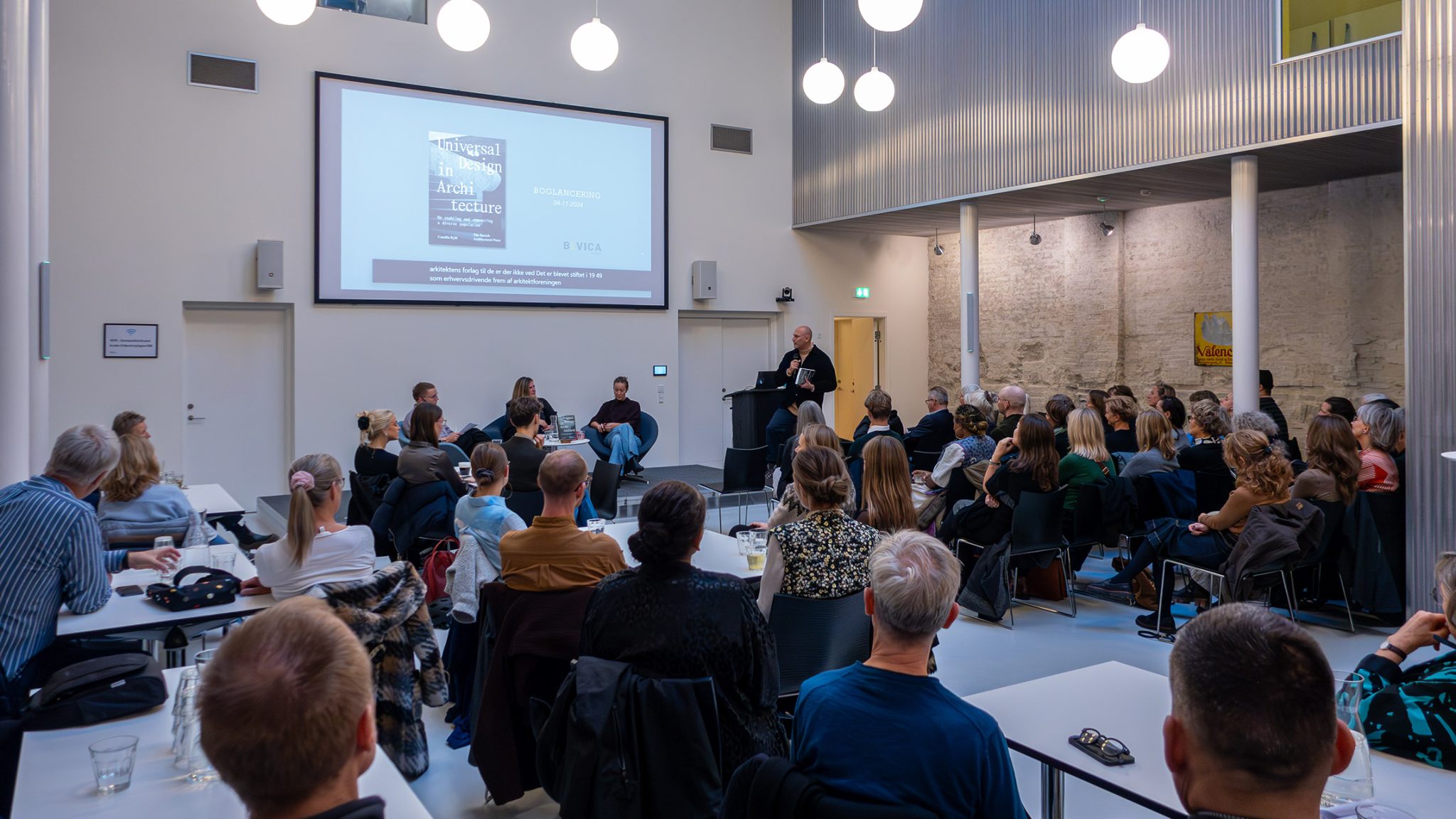
The architect recommends: “The book made me wiser about universal design as poetic approach to architecture”
Architect Anne Faurskov Hutcheson from AART has read Universal Design In Architecture and recommends it to both professionals and general interested people who want greater knowledge about universal design and how it is practiced in Denmark and Norway.
Title: Universal Design in Architecture.
Author: Camilla Ryhl.
Publisher: The Danish Architectural Press.
The concept of universal design is not a new concept, but in Denmark, especially in recent years, the concept has become part of the everyday life of architects. This book is a good place to start if you are not familiar with the concept, but it is also interesting reading for the expert in relation to the nuances that exist within universal design and its understanding from a wider Nordic perspective.
The author is one of the most well-known profiles in the field of universal design in Denmark and has made great efforts over the years to spread the knowledge of universal design in the Nordic countries.
The book is structured in five sections. The first three are an introduction to the concept of universal design, as well as various ways and principles of implementing universal design in architecture. The next section consists of 10 interviews with practicing architects in respectively. Denmark and Norway. The interviewees come from companies of different sizes and specialties, but all have in common that they work with high architectural quality and have a strong focus on sensuous experiences in architecture. The last section is a rounding and perspective.
The book highlights in a vivid and interesting way differences in how universal design is experienced and understood in Denmark and Norway. It reveals that there is a considerable difference in how universal design is understood and practiced in the two countries that are otherwise closely geographically and culturally connected. The book touches on the historical and developmental background that has led to these differences. In Denmark, until recently, the focus has mainly been on accessibility, i.e. a relatively narrow focus on being able to get in and around a building. In Norway, the special Norwegian version of universal design: “ning” has been part of the building code for a long time.
The author uncovers through interviews how universal design can be a source of inspiration for architects in both countries, when interpreted in its original form, as a goal to include people with different functional abilities. It is also revealed that universal design can be perceived as an obstacle for architects in everyday practice when it is interpreted as part of the already large set of rules that architecture is subject to in both Denmark and Norway. The interviews are structured as a dialogue between the author and the architect. This form provides an interesting insight into how architects themselves view their practice in relation to the concept of universal design. In addition, the interviews unfold how sensory accessibility is closely related to architectural quality.
The book is well written, it gives the reader a good introduction to both the concept of universal design and how it can be incorporated into the practice of architecture. It is scientifically based, but at the same time easy to read even without prior knowledge of universal design.
I particularly want to highlight the poetic approach to universal design, which is felt throughout the book. The strong focus on how universal design is closely linked to sensuality and quality in architecture. The narrative is furthermore supported by beautiful poetic mood pictures.
I would recommend the book both to professionals who wish to deepen their knowledge of universal design, and to anyone who has an interest in universal design and architecture practice in the Nordic countries.

Latest News
Follow the latest news from the Bevica Foundation below.
.png)