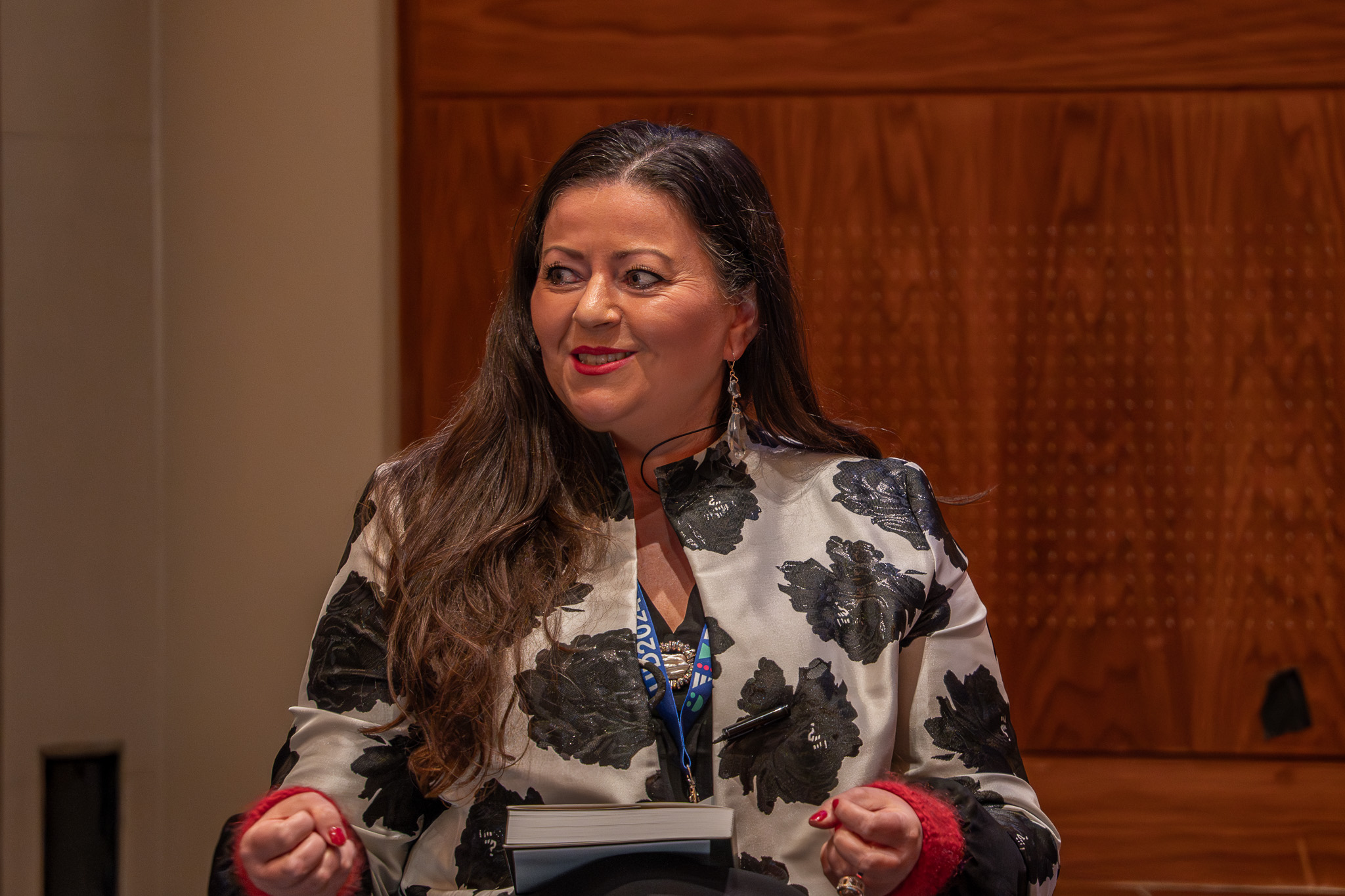
Architecture begins and ends with people

Architecture is not primarily about buildings, but about people, the senses, and the possibilities our environments offer. According to Tina Larsen, President of the Norwegian Association of Architects, architecture must be grounded in ethics, knowledge, and a fundamental understanding of human diversity.
When Tina Larsen, President of the Norwegian Association of Architects, speaks about architecture, she begins in one place. With the recognition that architecture is profoundly important. Not only as form or aesthetics, but as the framework for the lives all people live. Architecture is not just what we look at, but what we move through, orient ourselves by, and experience with our bodies.
“Architecture is nothing without people. It is about giving us possibilities,” says Tina Larsen.
Accessibility begins with the senses
A central point Tina Larsen emphasises is the connection between what she calls sensory architecture, nature, and accessibility. She explains it like this:
“Integrating nature into the way we design our neighbourhoods truly creates accessibility for people of all ages.”
Sensory qualities such as light, materials, transitions between spaces, buildings, and places, and spatial experiences play a decisive role in how we move through and inhabit architecture. She stresses that these elements affect our mental health, our sense of safety, and our willingness to participate.
Hear Tina Larsen talk about her perspective on universally designed architecture below.
Knowledge of universal design is the prerequisite
According to Tina Larsen, a lack of knowledge is one of the greatest barriers to creating architecture that genuinely works for many people. Universal design requires architects and planners to learn together with those who use architecture.
As Tina Larsen herself puts it: “We need to learn more about universal design together with the people who are users, and who have different disabilities.”
For Tina Larsen, it is not about designing for an average that merely produces uniformity in architecture, but about understanding variation. When people with different experiences are invited into the design process, a form of knowledge emerges that cannot be replaced by standards or checklists.
“Architecture can be a tool for creating the society we want to be,” Tina Larsen concludes.
Bevica Fonden met Tina Larsen at the UD2024 conference in Oslo.
More knowledge about Universal Design
Explore the Bevica Foundation's Knowledge Library

Latest News
Follow the latest news from the Bevica Foundation below.
.png)