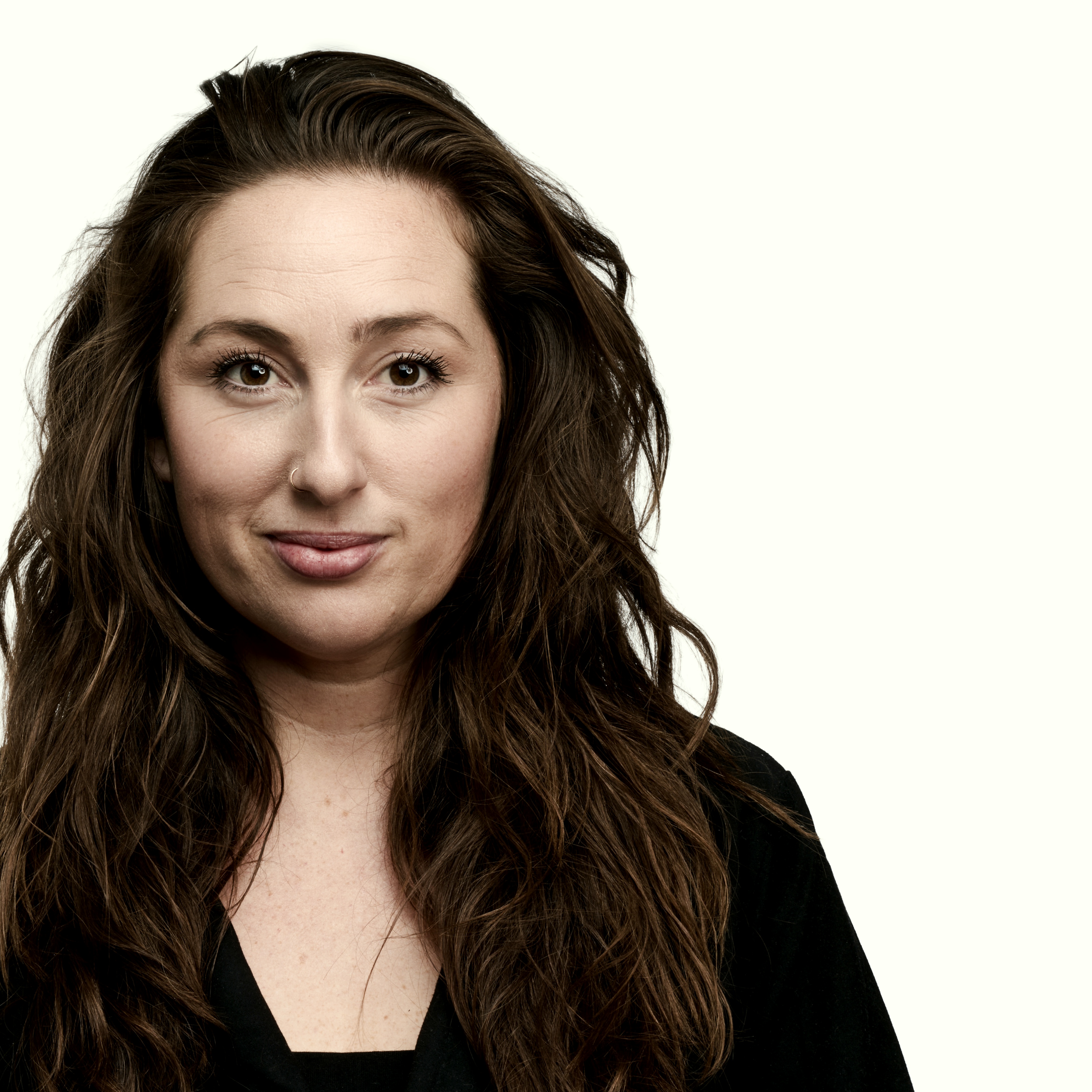
Sarah Fredelund
Inclusive Encounters: Universal Design Research through 1:1 Spatial Prototyping in Temporary Cultural Environments
A brief summary of the project
When people with different bodies and experiences cannot come together on equal and inclusive terms, they lose their sense of belonging, and society loses opportunities for encounters that can challenge prejudice and strengthen social bonds. The project therefore explores not only how cultural life can become more accessible, but also how shared spaces can create the conditions for encounters that make a diverse society possible. A 2024 survey by Disabled People’s Organisations Denmark found that eight out of ten Danes had felt unsure about how to interact with persons with disabilities, particularly in public spaces. This does not necessarily indicate a lack of willingness, but rather an absence of everyday situations in which people naturally meet. Even when a place meets all physical accessibility requirements, it can still be socially exclusionary through, for example, circulation patterns, overwhelming sensory stimuli or a spatial logic that signals whom the place is intended for. Access is therefore not the same as participation, encounters or belonging. Belonging cannot be designed directly, but it can emerge when the right spatial and sensory conditions are in place.
The PhD project’s central contribution is a new analytical concept within Universal Design (UD): encounterability. While the field has traditionally focused on accessibility and, increasingly, participation, the project introduces encounterability as a third level. The concept describes the spatial and sensory conditions that make encounters across differences more or less likely. The project thus examines how architecture can create better conditions for people to stay long enough, feel safe enough and come close enough to one another for encounters to emerge. It builds on Universal Design research that highlights the need to address the social and relational dimensions of inclusion.
Encounters across differences rarely occur in planned situations. Participating side by side does not necessarily lead to interaction. Research drawing on theories of encounter highlights the importance of small, in-between moments: while waiting, taking a break, looking for somewhere to sit or lingering a little longer. These are precisely the informal moments that architecture often overlooks. While much architecture is designed around movement, such as entering, finding one’s way and reaching a destination, the project explores conditions that invite people to stay and spend unplanned time in one another’s presence. During the intervention phases, temporary social spaces, termed Social Dwelling Spaces, will therefore be developed to support lingering, waiting and encounters across differences.
The project also explores the potential of temporary architecture as a living laboratory in which Universal Design solutions can be developed, tested and refined at full scale. Festivals are particularly suitable research settings because spatial interventions can be adjusted and retested quickly while bringing together large and diverse audiences. The project will be conducted in collaboration with CPH:DOX across three festival editions between 2027 and 2030. New design strategies will be developed and tested in close collaboration with festival audiences. Repeated intervention cycles will allow insights to be continually translated into new knowledge and concrete design approaches.
CPH:DOX also provides a strong platform for disseminating the findings. With its large audience, approximately 150 partners and international standing, the festival offers opportunities to develop, test and showcase the project’s findings in practice. For the Bevica Foundation, this means that the project can both generate new knowledge and increase the visibility and influence of Universal Design.
The knowledge generated by the project will be systematically documented and translated into concrete design strategies addressing, among other things, lighting, materiality, opportunities to stay and spatial organisation. These strategies are intended to inspire and be adapted by cultural institutions, festivals, municipalities and architects. The aim is therefore not simply to make cultural life more accessible, but to develop knowledge about how spaces can create better conditions for people with different bodies and experiences to enter, participate, meet and experience a sense of belonging.